Weber Key Review
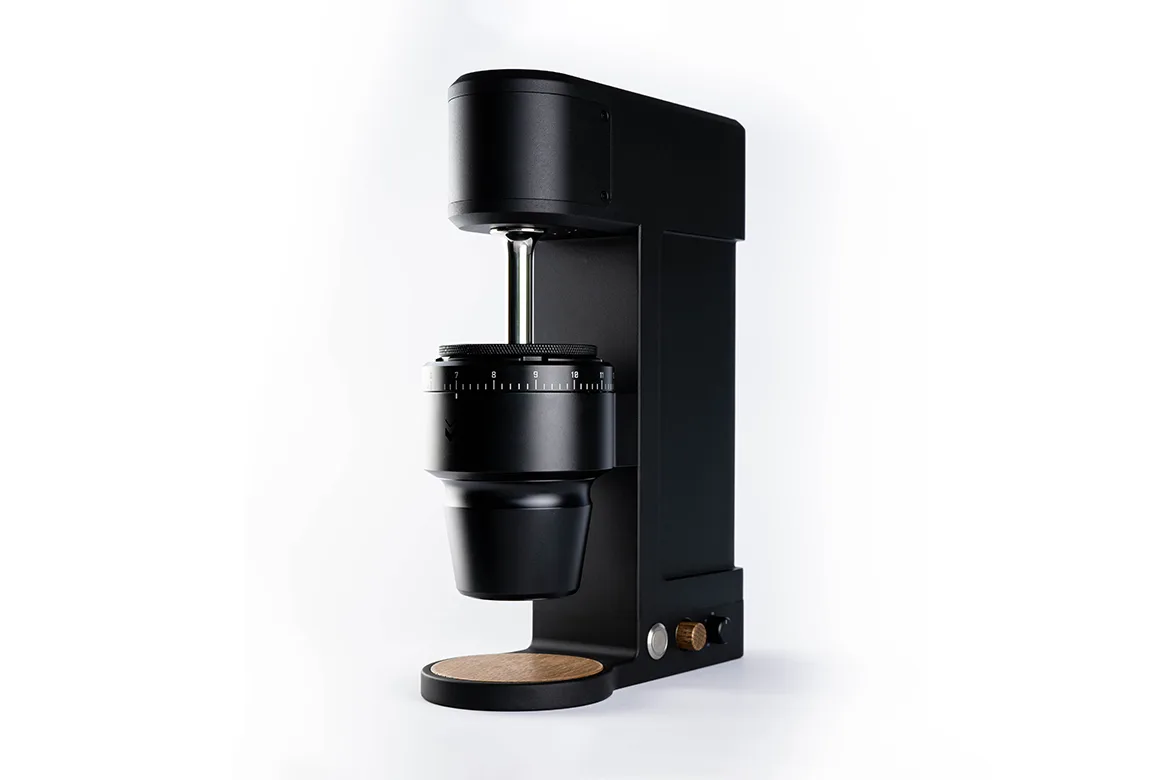
A minimalist, gravity-fed conical grinder with a unique vertical design. 83mm conical SSP burrs and touch-sensitive controls.
What We Love
Room for Improvement
Technical Specifications
| RPM | Fixed 500 |
| Retention | <0.1g |
| Motor Power | 600W |
| Weight | 11000g |
| Bean Capacity | 50g |
Grind Quality
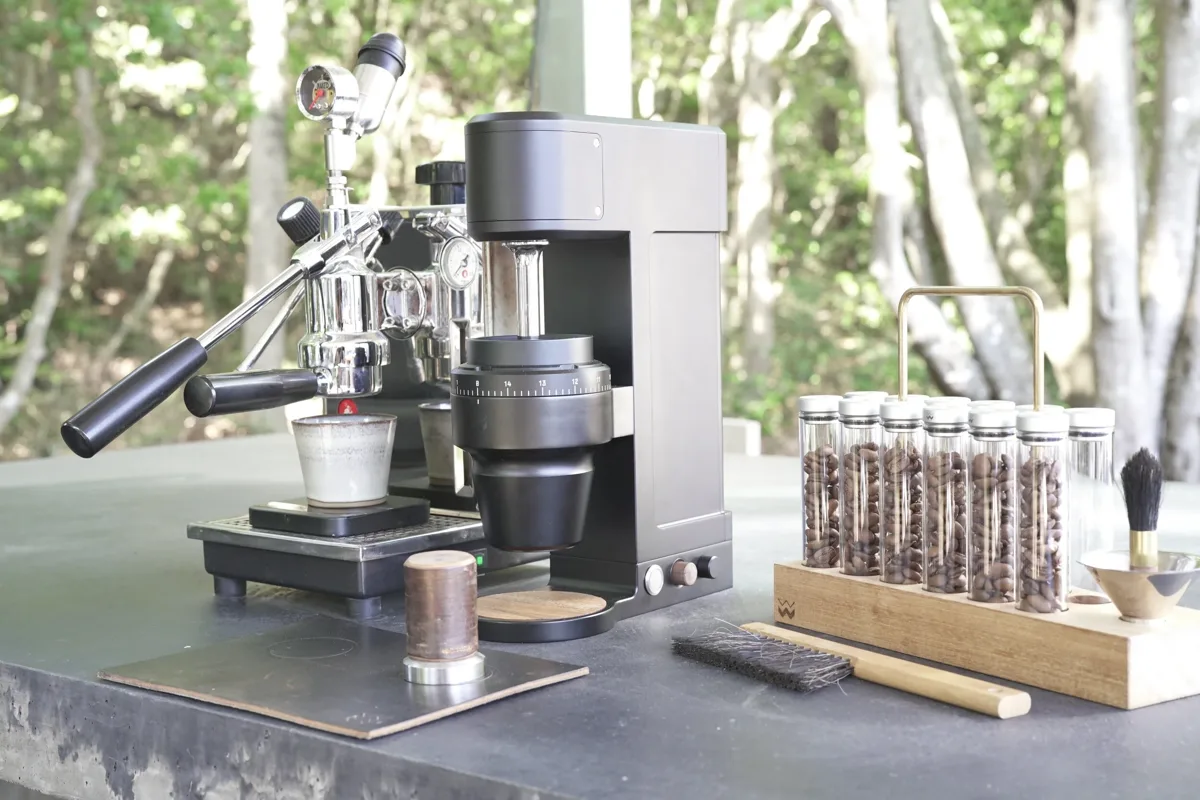
The Key is built around 83mm conical burrs sourced from Mazzer — specifically, the Robur set — which Weber then machines, pre-seasons, and seals with a food-safe titanium nitride coating.
The result is a particle distribution that competes with the best espresso grinders on the market, and the pre-seasoning means you skip the usual 5-pound break-in window that fresh conical burrs demand.
In the cup, you get the clarity and sweetness that large conicals are known for, with noticeably less fines than the typical 71mm or 74mm conical.
One thing worth flagging: this is a fixed-speed motor at 500 RPM, not the variable RPM some listings suggest.
From owner reports, the knob exists but the practical range is narrow, and most users leave it parked. That is a minor footnote for a conical, which is more forgiving of RPM choice than a flat.
Build and Design
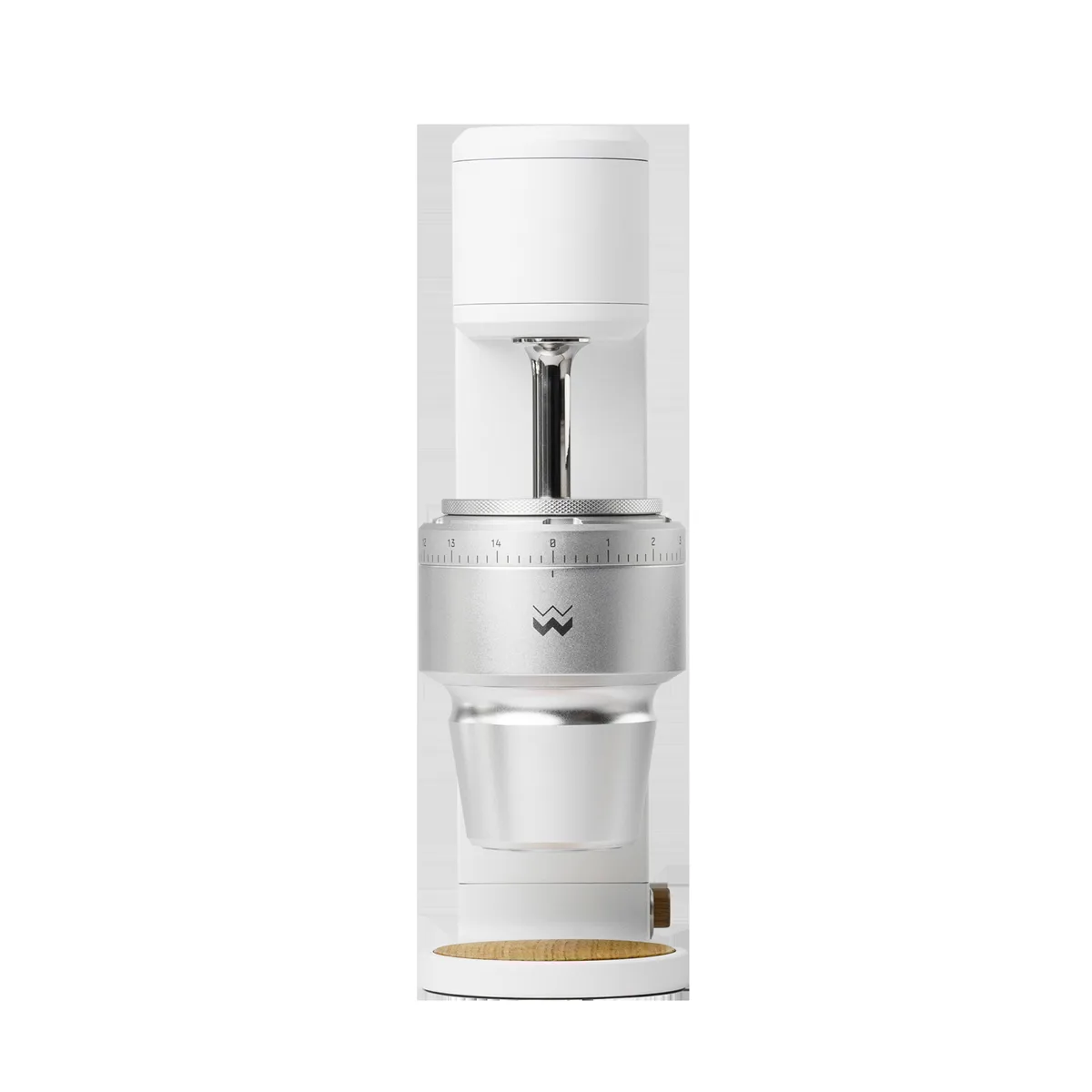
The vertical, gravity-fed chassis is the Key's signature. Because the burrs define the width rather than the motor housing, the footprint is genuinely small for an 83mm grinder — roughly the counter space of a Niche Zero, which is remarkable given what is inside.
At 11kg it is heavy for its size, and the dense mass is part of why it feels planted during grinding.
The touch-sensitive controls look clean on a shelf but have drawn criticism from owners for being less responsive than a physical switch, especially with wet or floured fingers. The 600W motor has no trouble with dense espresso doses, and 50% torque increases on the Mk.2 specifically addressed complaints about lighter roasts bogging the burrs.
Workflow
Single-dose is where the Key is designed to live. The patented Magic Tumbler acts as dosing cup, distribution tool, and funnel in one magnetic assembly that lands on a hardwood centering pad.
It is a genuinely clever piece of engineering, though some owners report that it underperforms a proper manual WDT tool for the most demanding extractions and eventually remove the wiper.
Retention is negligible at under 0.1g, which is what you want from a single-dose platform. The integrated cleaning brush with a replaceable head and the included bellows make blow-out quick.
One recurring complaint: the bean feeder can jam with certain roasts, and several owners report pushing beans down with their fingers rather than trusting gravity alone. The lack of an anti-static system also means a light RDT spritz is still part of the routine.
Who It Suits
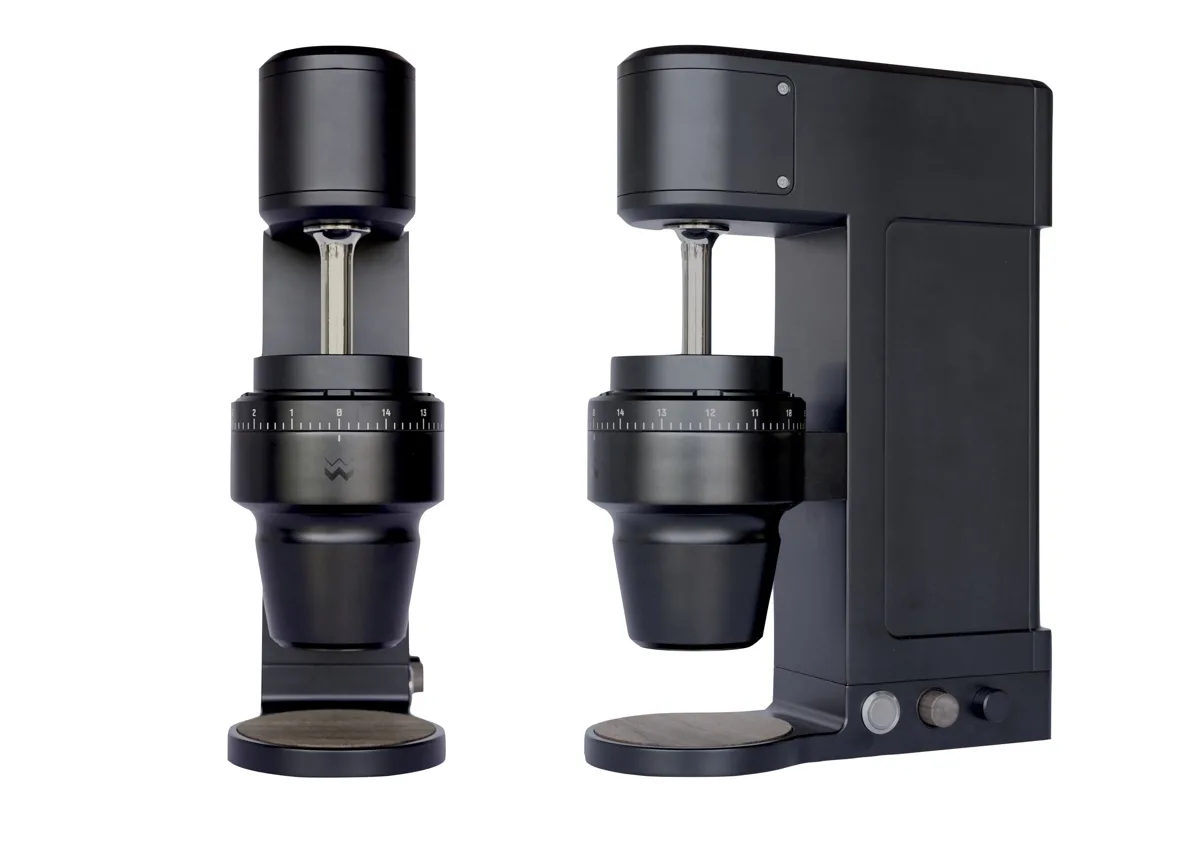
This is an endgame grinder for the single-dose espresso obsessive who values the Weber design language and wants a large conical in a compact chassis.
If you are weighing it against a Kafatek Monolith conical or a flat like the Monolith Flat MAX, the Key is the more space-efficient and arguably more elegant choice, though neither flat nor conical is strictly better — they are different flavor profiles.
It is also worth comparing the workflow philosophy to the Mahlkonig EK43 at a similar or lower price. The EK43 is a flat burr workhorse with massive throughput and none of the Key's design fuss, but it is also nowhere near as pretty on a home counter and not single-dose native.
If you are grinding for one espresso at a time and want a statement piece, the Key makes sense. If you want raw, repeatable grind quality per dollar, the value math is harder.
Concerns at the Price
At roughly $2,050 for the Mk.2, you are paying for industrial design, the Weber brand, and the vertical form factor as much as for incremental burr performance. The bean feeder complaints, the touch controls, and the lack of anti-static treatment are all small things individually, but at this price point small things sting.
There is also the broader question of whether an 83mm conical is the right tool — some reviewers and owners note that a well-executed flat burr at this size produces a more modern, transparent shot, while conicals deliver a more traditional, body-forward cup.
For someone who already knows they want a Weber and has the budget, the Key delivers on its core promise: large-conical grind quality, negligible retention, and a footprint that should not dominate a kitchen. For everyone else, it is a beautifully made grinder in a category with strong alternatives.
Buy the Weber Key Mk.2 if you are a single-dose espresso enthusiast who values the vertical design, negligible retention, and a large conical in a compact chassis — and if the price is not a stretch. Skip it if you want maximum grind quality per dollar, need a flat burr flavor profile, or are unwilling to tolerate the bean feeder quirks and touch controls that come with the Weber design language at this premium.
Hassan is a software developer with a coffee problem. Coffee Grinder Index is his attempt to solve it — one grinder at a time.