Zassenhaus Barista Pro Review
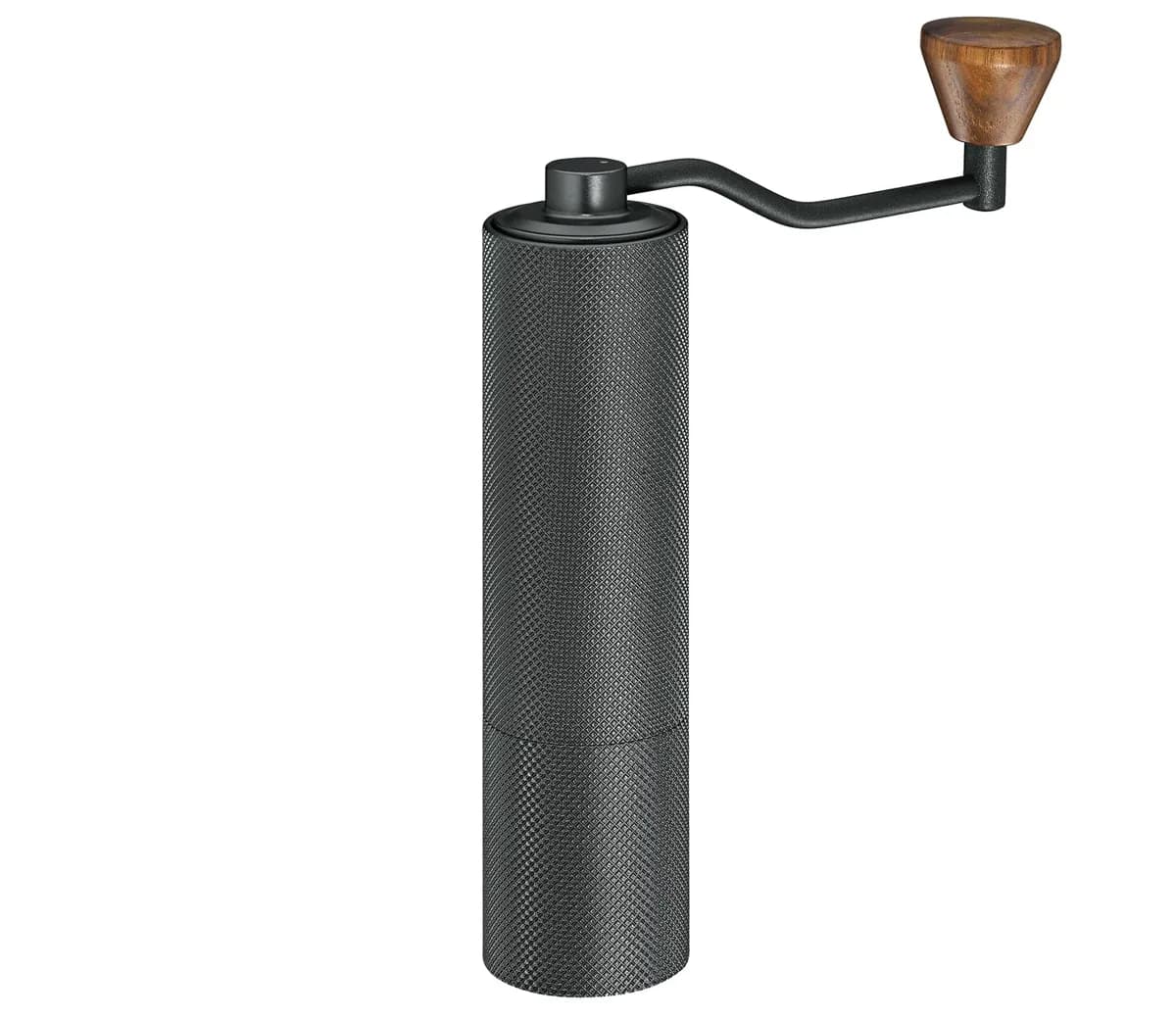
Modern hand grinder from the heritage brand. Stainless steel body with stepless adjustment for espresso-capable fineness.
What We Love
Room for Improvement
Technical Specifications
| Weight | 530g |
| Bean Capacity | 35g |
Grind Quality
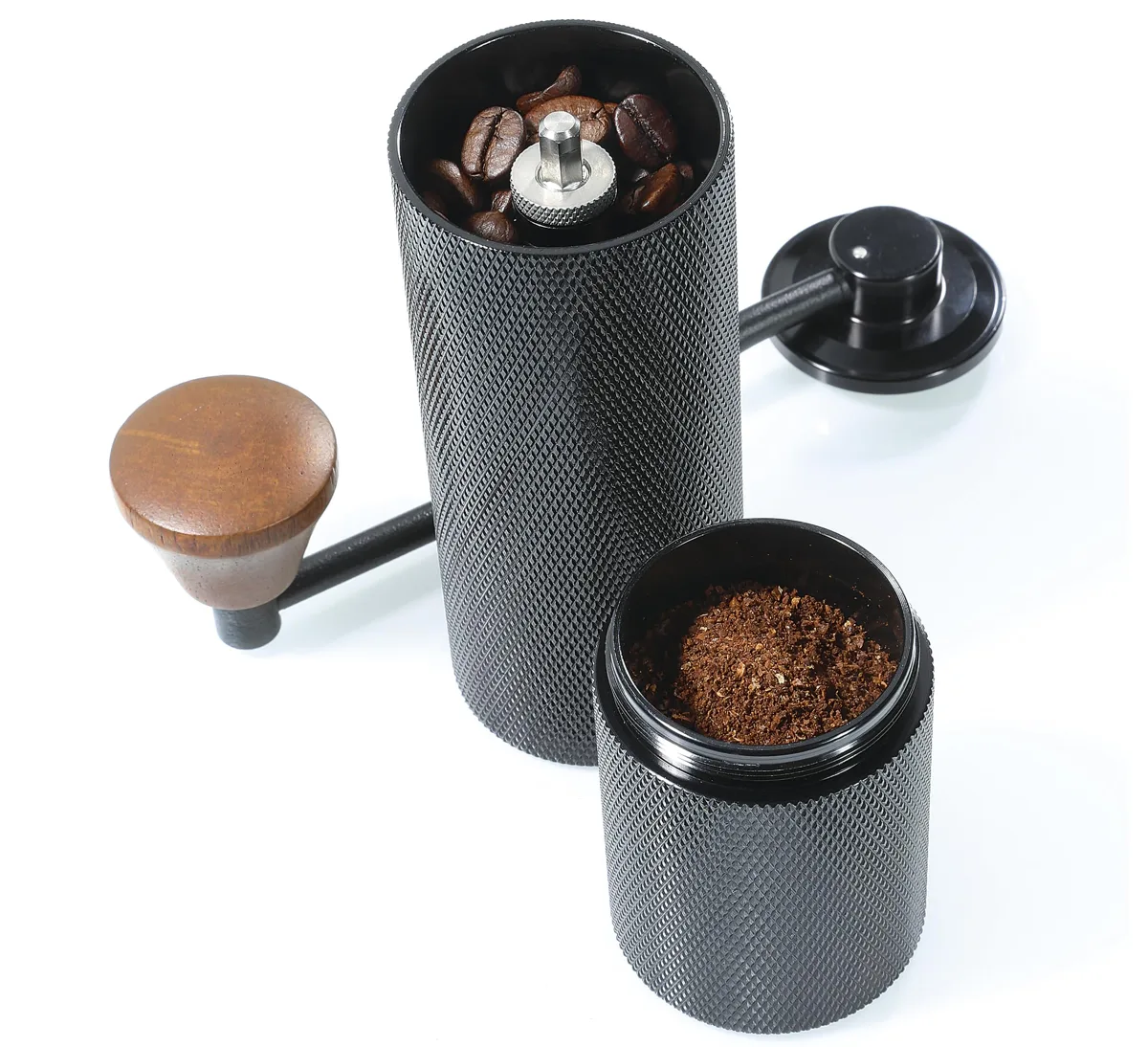
The Barista 2.0 ships with a 38mm conical steel burr set and stepless adjustment, and on paper that is the configuration most home baristas shopping at this price are looking for. The bottom-mounted adjustment is genuinely stepless, which is a notable advantage over rivals like the Timemore C3 ESP that use click-based collars.
In practice, Zassenhaus's reputation for particle distribution lags the specialist hand-grinder makers. Where the 1Zpresso K-Ultra has been benchmarked as producing a tight, repeatable espresso distribution, the Barista 2.0's burr geometry and burr design feel more general-purpose.
Pulls are good rather than great, and dial-in takes more patience than it should for a 38mm conical in 2024.
The burr size is the real story. Thirty-eight millimetres is a useful step up from the 30-ish millimetre burrs in entry-level 1Zpresso and Timemore hand grinders, and you can feel it in cup flow.
But it is well short of the 47–48mm territory occupied by the Kinu M47 Phoenix, and that gap is visible in fines percentage and shot clarity.
Build Quality
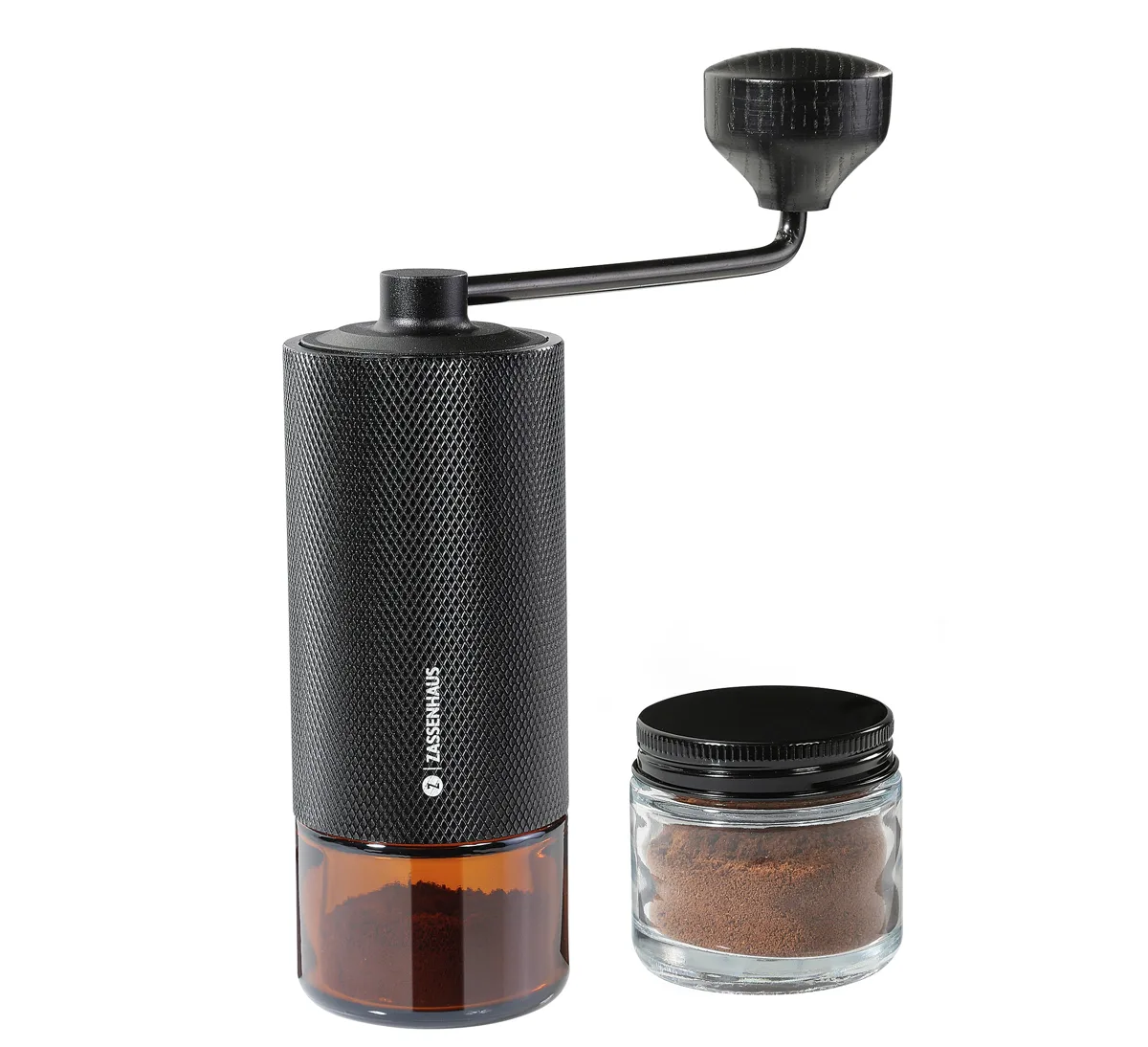
This is where the Barista 2.0 earns its keep. The body is CNC-milled stainless steel, the spindle runs on a double ball-bearing guide for smoother cranking, and the whole thing weighs 530g, which is a reassuring heft in the hand without being a wrist workout.
Made in Solingen, Germany, it carries the kind of finish and tolerances you expect from a heritage manufacturer. It looks, feels and disassembles like a tool, not a lifestyle object.
The aesthetic is restrained, almost industrial. No hardwood drawer, no brass flourishes. That will disappoint buyers who associate Zassenhaus with the vintage 169DG look — that 25-year-warrantied model with its walnut base and cast iron hopper is a completely different animal.
The Barista 2.0 is the modern, espresso-focused counterpart, and the build quality is its strongest argument.
Workflow in Daily Use
It is a single-dose grinder, with a 35g bean capacity that lines up nicely with a typical double-shot dose plus a little headroom. Loading, grinding, knocking out and weighing back is a clean loop.
The double ball-bearing spindle reduces the wobble you sometimes feel in cheaper hand grinders, and the crank handle turns smoothly even at espresso settings.
There are a few workflow nags. The grinder has no anti-static design, and plastic-free steel bodies are notorious for clinging to grounds. A quick tap and a RDT spritz largely solve it, but neither is a feature.
The bottom-burrel adjustment is easy to set and read, but it is slower to make micro-adjustments than a top dial like the 1Zpresso Q-Air, which is a better choice if you change brew methods often.
At 530g, the Barista 2.0 is heavier than the Timemore C3s but lighter than the Kinu M47 Phoenix, and feels comfortable for a 20–25g espresso dose without becoming a chore.
Who It Suits
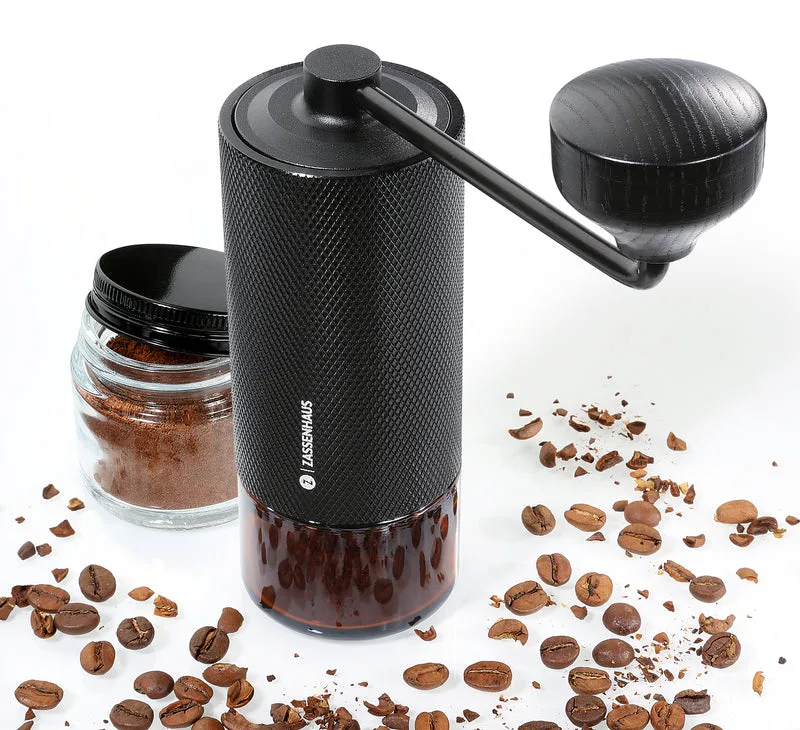
The Barista 2.0 is for someone who wants a German-made, stepless manual grinder that doubles as an espresso tool and a long-term kitchen object. If you value heritage, stainless steel construction and a stepless collar for fine espresso work, it makes a lot of sense.
It is also a good fit for buyers who have been eyeing vintage Zassenhaus mills for the design but want a burr set that can actually pull a modern espresso shot.
It is not the right pick for a data-driven home barista who wants the cleanest possible distribution chart. The 1Zpresso K-Ultra is a noticeably more capable espresso grinder at a similar price, and the Kinu M47 Phoenix is the upgrade to chase if your budget stretches.
And if you mainly brew filter and only occasionally pull shots, the 1Zpresso Q-Air will save you money and weight without giving up much grind quality.
Value and Verdict
At around 100 dollars, the Barista 2.0 is competitively priced against the established hand-grinder cohort, and the build quality alone justifies a serious look.
The trade-off is grind precision: the burr set is competent but not class-leading, and there is no getting around the fact that a 1Zpresso K-Ultra at a similar price is simply a more consistent espresso grinder.
For buyers who weight heritage, materials and stepless espresso control over outright particle distribution, the Barista 2.0 is a strong, well-built choice. For everyone else, the alternatives are sharper tools for the job.
The Zassenhaus Barista 2.0 is for buyers who want a German-made, stepless manual grinder with real heft and a long warranty, and who are happy to trade a little grind precision for build quality and heritage. It is not the pick for data-driven home baristas — the 1Zpresso K-Ultra and Kinu M47 Phoenix produce cleaner espresso shots at similar or slightly higher prices, and either is a better bet if grind consistency is the priority.
Hassan is a software developer with a coffee problem. Coffee Grinder Index is his attempt to solve it — one grinder at a time.