WPM ZD-17N Review
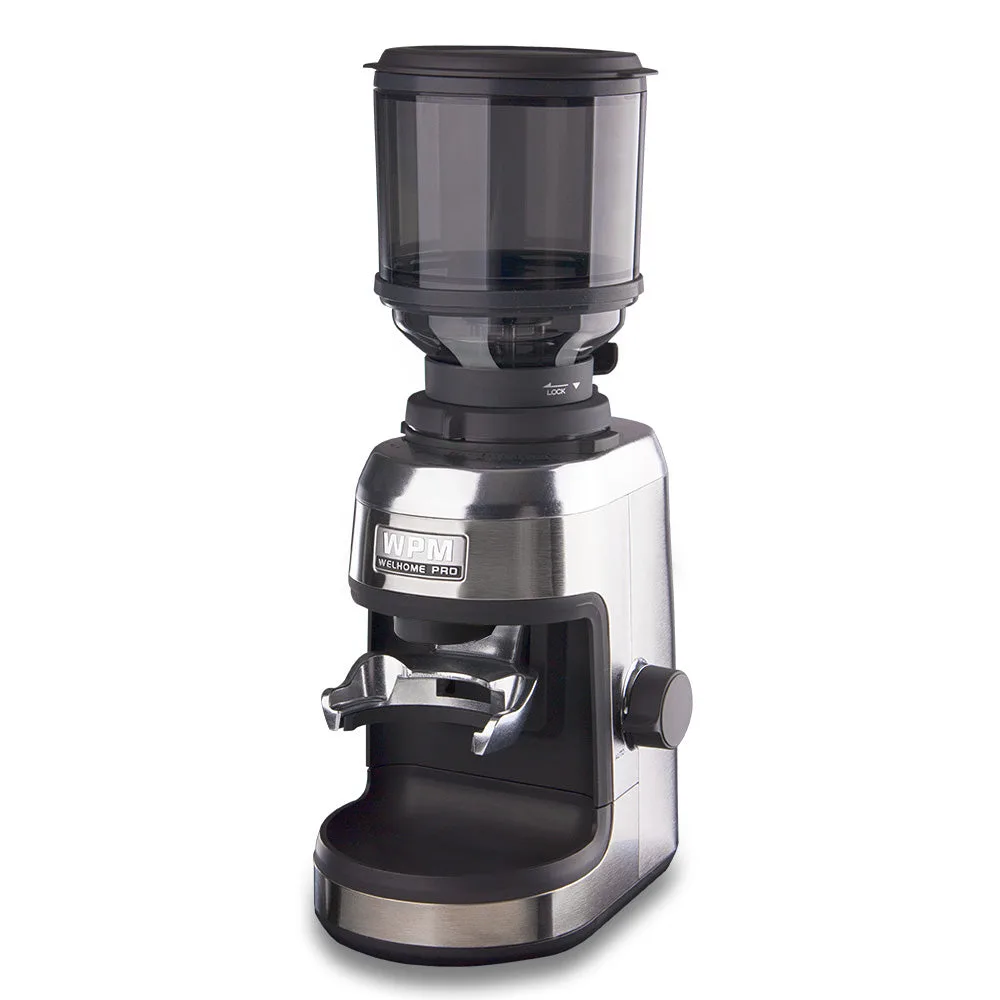
Budget-friendly prosumer grinder popular in Asia. 60mm conical burrs with stepless adjustment and timed dosing.
What We Love
Room for Improvement
Technical Specifications
| RPM | Fixed 1000 |
| Motor Power | 200W |
| Weight | 5000g |
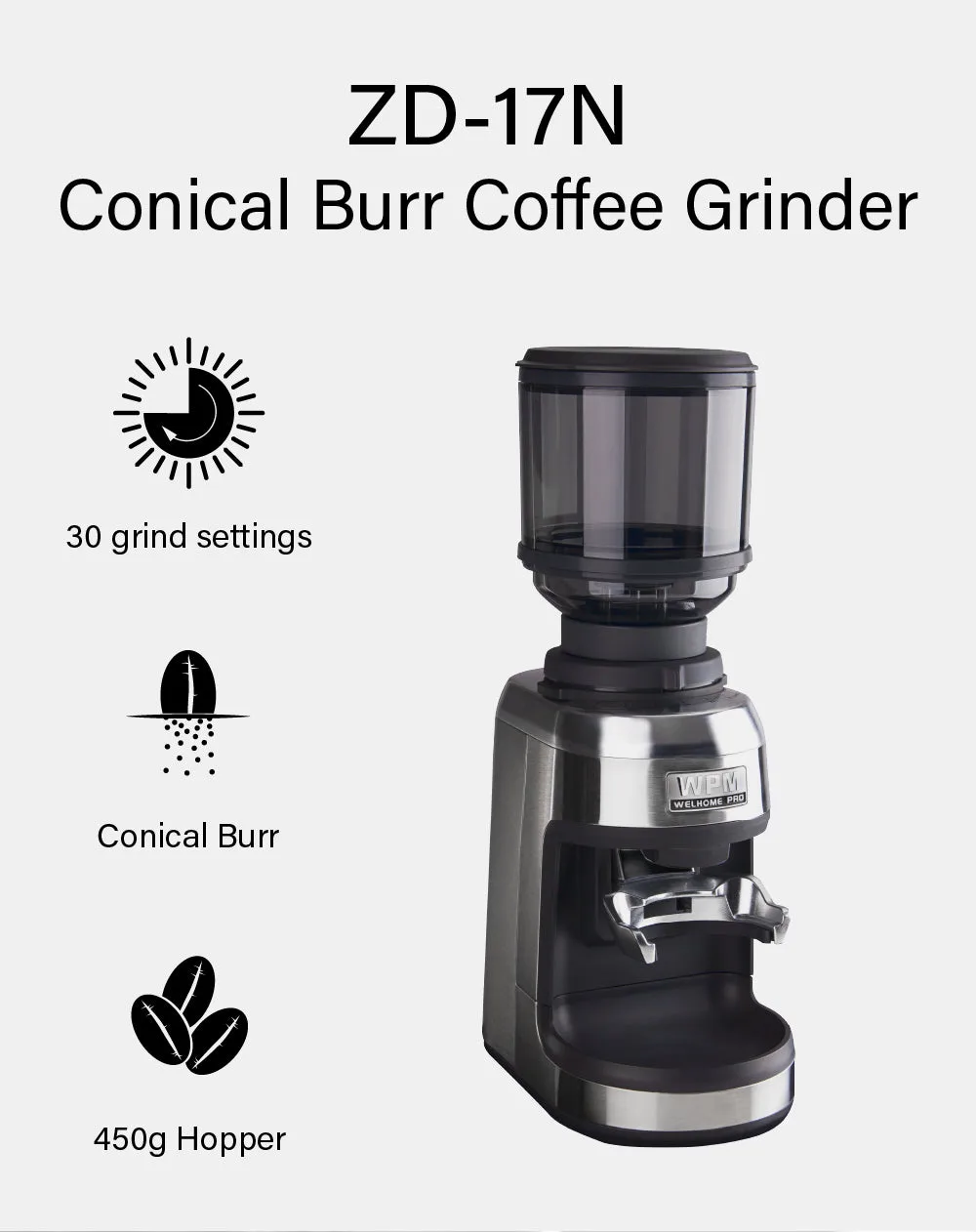
| Bean Capacity | 250g |
Grind Quality
The 60mm conical steel burrs are the headline feature, and at this price they punch above what you would normally expect. A 60mm conical is a serious piece of hardware — the same size class you'll find in grinders costing two or three times as much.
For straight espresso work, the burrs deliver the kind of clarity and sweetness that flat burrs often struggle to match, with a rounder, more chocolatey extraction profile that suits medium-to-dark roasts particularly well.
The fixed 1000 RPM is on the slower side for a conical at this price, and that's a quiet asset. Lower speeds mean less heat transfer to the grounds and less clumping, which helps with consistent puck prep.
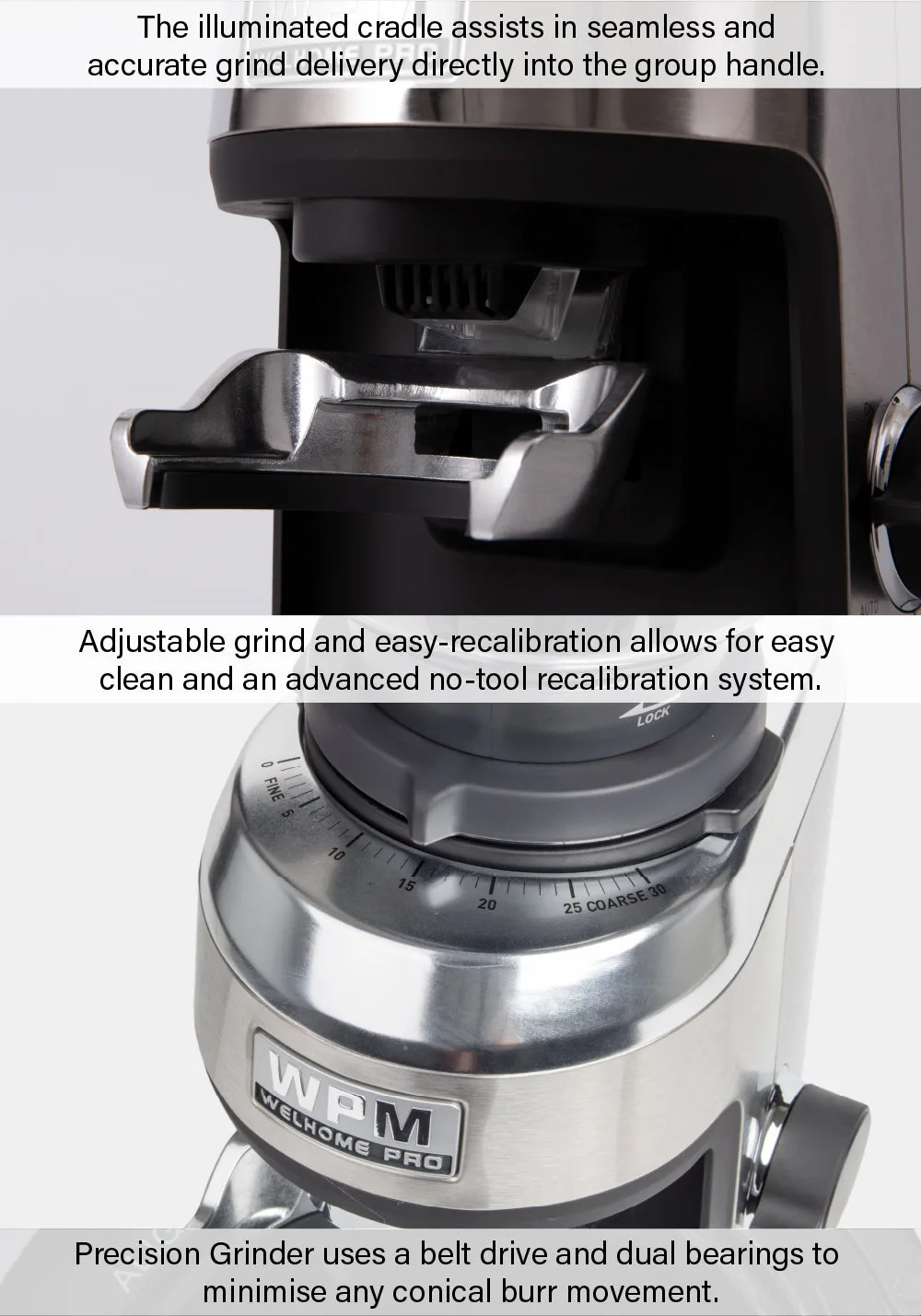
The stepless adjustment dial is the real differentiator though: it lets you make micron-level changes to the grind, which is exactly what you want when dialling in a new bag of beans or compensating for humidity shifts day to day.
In practice, the dial is smooth enough to find repeatable settings by feel, though there is no numbered reference so you'll want to note your positions.
Build Quality
At 5kg the grinder has a solid, planted feel on the bench, and the stainless body panels look clean if a little workmanlike.
The motor is a modest 200W unit, which is adequate for the burr size but not over-spec — this isn't a grinder designed to be pushed hard through back-to-back shots in a café.
The conical steel burrs themselves should be durable, though steel will dull faster than the hardened red-dot or coated burrs found on some competitors.
The no-tool recalibration system is a genuine plus for a budget machine. It means you can take the burrs apart for cleaning and put them back exactly where they were, without needing shims or a service visit.
The 250g hopper is on the small side for a home hopper-fed machine; if you're making multiple milk drinks a day you'll refill it often.
Build feels like a step up from a typical sub-$200 appliance grinder, but a clear step down from something like the Varia VS3 Gen 2 in terms of finish and refinement.
Workflow in Daily Use
Hopper-fed workflow is straightforward: fill the hopper, set the grind, and dose into your portafilter. There's no anti-static system, which is the most obvious day-to-day friction point.
Without ionisation or RDT you'll get some static and retention, particularly in dry winter conditions — expect to tap the portafilter and possibly give it a quick spritz of water before grinding.
Timed dosing is standard, and the illuminated cradle makes it easier to see what you're doing in low light, which is a nice touch for early-morning pulls.
The Tap & Go activation is convenient when you're doing single shots, but a switch from timed to manual dosing mid-session is the kind of thing you'll miss if you're used to it on a Baratza. For a single-user home setup, the workflow is acceptable; for a household with multiple drinkers it will feel sluggish.
Who It's For
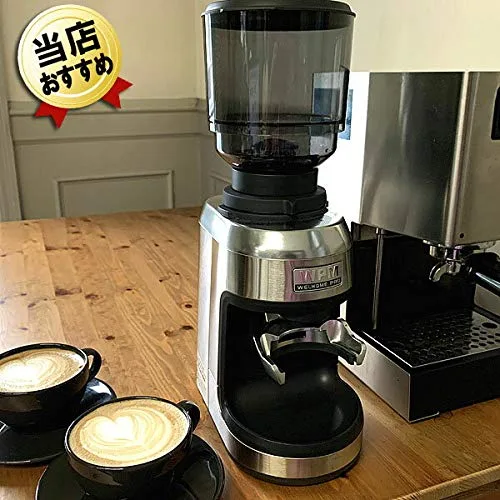
This grinder makes the most sense for someone who is moving up from a blade grinder or a basic electric conical, and who wants proper espresso performance without spending $500+. The stepless adjustment and 60mm burrs give you room to grow as your technique improves.
It's particularly well-suited to someone who already has a decent espresso machine — a good grinder on a modest machine will outpull a bad grinder on a great one, and at this price you can pair it with a mid-range machine and still come in under most budgets.
Availability outside Asia is the main caveat. If you can get one easily and the price converts well, it represents excellent value for the spec sheet.
In Western markets, warranty support and parts may be harder to source than for a Baratza or Eureka at a similar price, and that risk is real even if it doesn't materialise.
How It Compares
For pure espresso at this budget, the obvious comparison is with stepped grinders like the Breville Smart Grinder Pro, which is more widely available but uses a stepped adjustment system and a smaller burr set. The WPM trades build polish and dealer support for a meaningfully better burr and stepless control.
If you're considering hand grinding as an alternative, the 1Zpresso K-Ultra offers a 48mm conical with stepless adjustment at a comparable price, with zero retention and excellent grind quality — but with the obvious time cost of grinding by hand. The WPM wins on speed and consistency; the 1Zpresso wins on retention and finish.
Both are legitimate choices depending on your priorities.
The right buyer is someone moving up from an entry-level grinder who has a decent espresso machine and can source this locally — you get 60mm stepless conical performance at well under what that spec usually costs, and that's a real win. Anyone who needs strong warranty support in North America or Europe, or who grinds in large batches, should look elsewhere. Also skip it if static and retention bother you; this grinder has neither an ioniser nor a low-retention chute to mitigate those issues.
Hassan is a software developer with a coffee problem. Coffee Grinder Index is his attempt to solve it — one grinder at a time.