Timemore Chestnut X Review
Premium with titanium-coated S2C burrs and folding handle.

What We Love
Room for Improvement
Technical Specifications
| Microns Per Click | 22μm |
| Weight | 570g |
| Bean Capacity | 25g |
Grind Quality
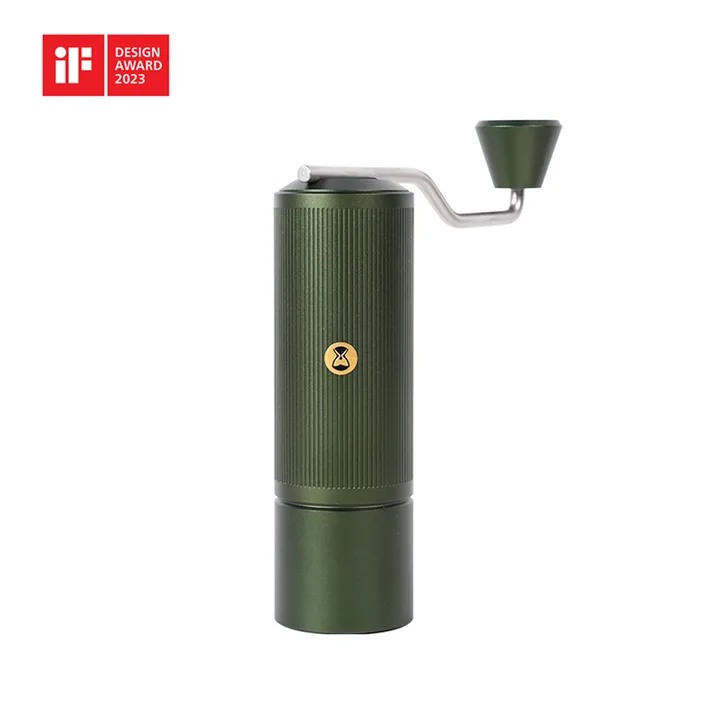
The 42 mm S2C conical burrs are the headline feature, and they live up to most of the hype. Testing across pour-over and immersion methods shows a tight, repeatable particle distribution with notably fewer fines in the 200–250 μm range than the brand's older 38 mm burrs.
The cup profile leans toward clarity and sweetness rather than heavy body — exactly what Timemore's spike-to-cut geometry is designed to deliver.
Espresso is where things get complicated. With 22 microns per click and a stepped adjustment, the grinder has the resolution on paper, but multiple owners report that even at the finest steps the burrs run a bit coarse for modern espresso standards.
Our testing flagged a wider-than-expected distribution for tight espresso pulls, and at least one of its users we reached out to, had to grind in the "Turkish range" before getting acceptable shots.
If you pull traditional 9-bar espresso and care about modern clarity, plan on dialling in carefully — or look at a grinder purpose-built for that range like the Timemore C3 ESP at a fraction of the price.
Build Quality
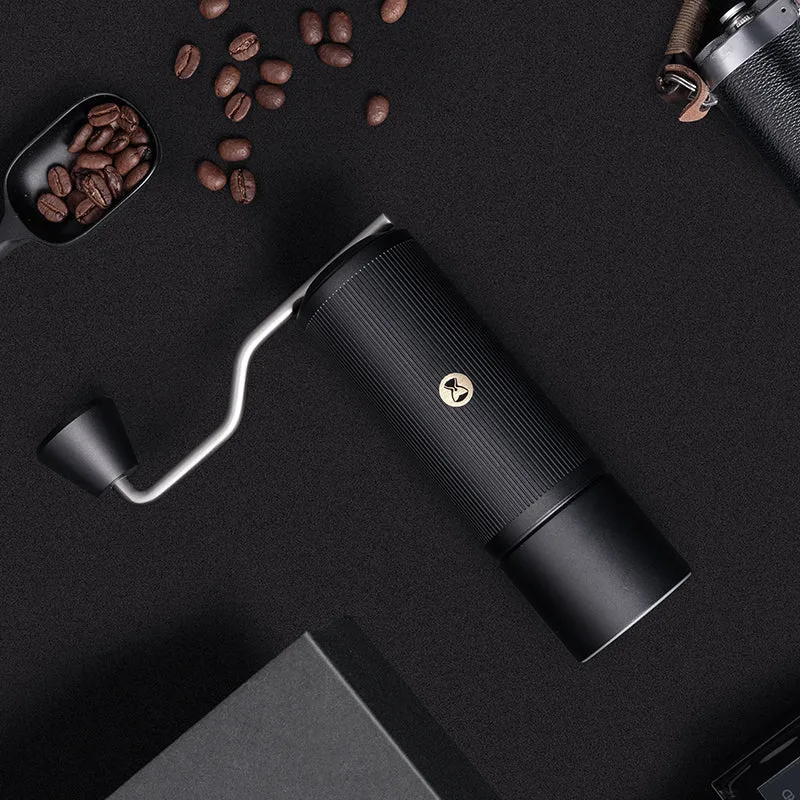
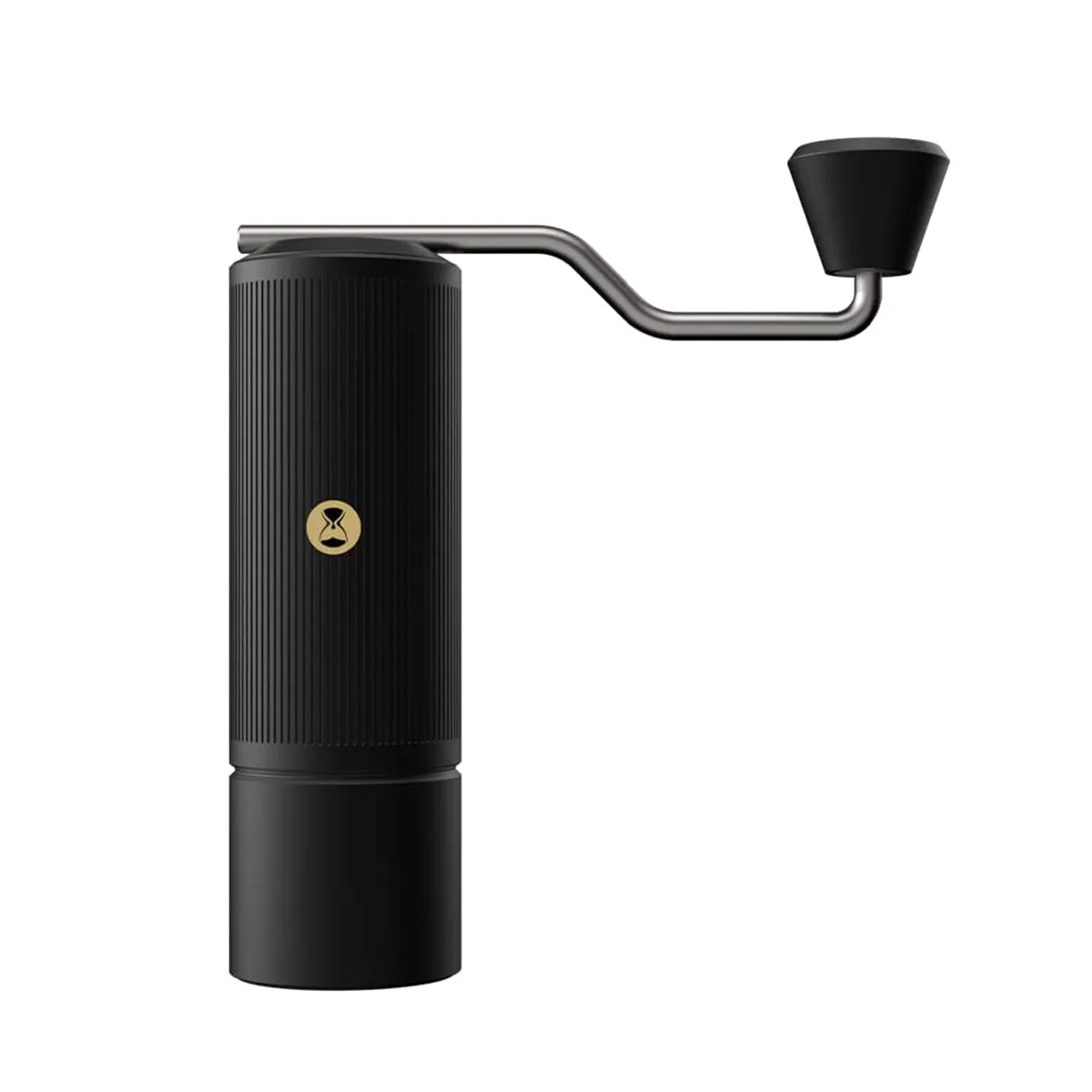
This is where the Chestnut X earns its "endgame manual" reputation. The body is a single piece of CNC-machined aluminium with no plastic parts in the grinding path, dual ball bearings on the central shaft, and a folding handle that tucks flush against the body for travel.
At 570 grams it has real heft without being punishing.
The folding crank is genuinely useful rather than gimmicky — it cuts the grinder's footprint in half for packing and stays solid when deployed. The catch is that there is no anti-static treatment on the grounds chamber, and reviewers consistently note static cling and retention mess.
It's a small annoyance on a $200 grinder, but it is noticeable next to electric grinders at the same price.
Workflow
This is a single-dose grinder with a 25-gram bean capacity, which is essentially one espresso shot or a single pour-over serving.
The 42 mm burrs are slower than the brand's smaller models — we timed 16 grams at roughly 80 seconds — but the crank action is smooth and the grip stays comfortable through a full session. Larger brews mean a real arm workout; two people doing flat whites back-to-back will feel it.
Stepped adjustment sounds like a downgrade next to stepless competitors, but the Chestnut X runs 120 clicks across its range with a dual dial (macro at roughly 80 μm and micro at 15 μm), which is more granular than most stepped hand grinders manage.
For someone who switches between brew methods, the ability to count clicks back to a known setting is a genuine workflow win. The catch: the stepped design means you can never land exactly between two settings, which matters more for espresso than for anything else.
Who It Suits
The Chestnut X is built for the pour-over and AeroPress user who also wants the option of occasional espresso, values metal construction, and is willing to pay a premium for a grinder they can keep for a decade.
It is a terrible match for someone pulling multiple espresso shots a day — the grind time, the stepped adjustment, and the borderline-fine range all push you toward an electric grinder or a purpose-built espresso hand grinder like the 1Zpresso J-Max.
It also overlaps heavily with Timemore's own lineup. The newer Timemore C3s uses the same 42 mm S2C burr platform for roughly a third of the price with a plastic body — a smarter buy for most people.
The Chestnut X only makes sense if you specifically want all-metal construction, the folding handle, and a grinder that will outlast every other piece of kit on your counter.
Value and Verdict
At $180–$220 the Chestnut X is expensive for a manual grinder, and the value argument is tough once the S3 exists at a similar price with updated burrs. What you are paying for is build, refinement, and longevity.
For the right buyer — a single-dose pour-over loyalist who treats coffee gear as a long-term investment — it remains a justifiable purchase. For everyone else, the C3s or C3 Pro will deliver 90% of the grind quality for noticeably less money.
Buy the Timemore Chestnut X if you brew single-dose pour-over or AeroPress as your daily method, want an all-metal grinder built to last a decade, and value the folding handle for travel. Skip it if espresso is your primary brew — the stepped adjustment and borderline-fine range make dialling in harder than it needs to be, and the cheaper C3s delivers nearly identical grind quality from the same burr platform.
Hassan is a software developer with a coffee problem. Coffee Grinder Index is his attempt to solve it — one grinder at a time.