Porlex Tall II Review
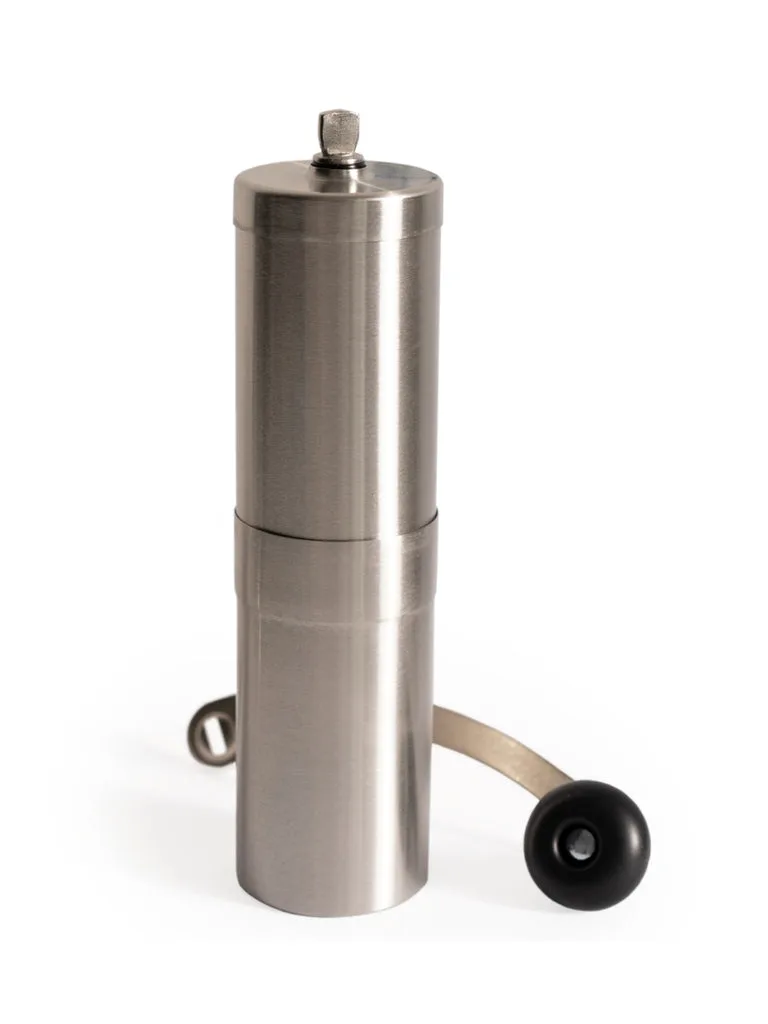
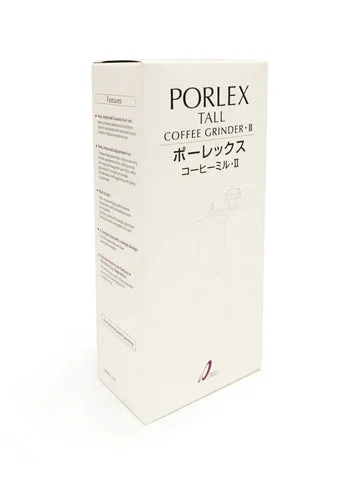
The full-size Porlex with 30g capacity. Same Japanese ceramic burrs as the Mini but in a taller body for home use.
What We Love
Room for Improvement
Technical Specifications
| Weight | 340g |
| Bean Capacity | 30g |
Grind Quality
The Porlex Tall II uses the same redesigned ceramic conical burr set found in the Porlex Mini II, a 30mm conical that Porlex claims produces roughly 1.3 times more ground coffee per rotation than the first-generation Tall.
That upgrade is real and worth acknowledging: the outer burr is now stabilised with three notches that keep it from wobbling, which was the single biggest complaint about the original.
Even so, ceramic conical burrs at 30mm sit in a tough spot in 2025. The stepped adjustment is calibrated to roughly 37 microns per click, which sounds precise until you compare it against steel-burr hand grinders at the same price. For pour-over with medium-to-coarse grinds, the Tall II produces acceptable particle distribution.
It is not sharp, clean, or repeatable enough for light-roast filter work where clarity matters, and you can see it in the cup: muddier than a 1Zpresso, flatter than a Timemore Chestnut.
Stepped adjustment also means you cannot truly dial in a recipe. You pick the closest click and live with it.
Build Quality
This is the Tall II's strongest suit. The body, handle, and grounds bin are all brushed stainless steel, and the unit is made in Porlex's Kirishima City, Kagoshima factory in Japan.
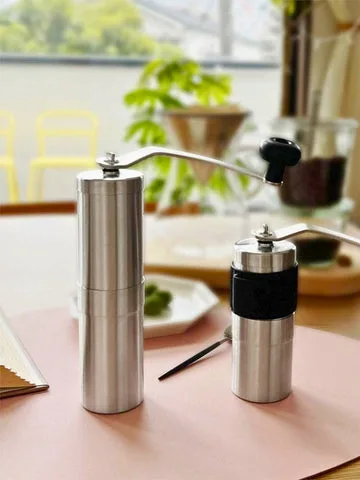
At 340g it has a real feeling of substance in the hand without being punishing, and the slim cylinder slips into an AeroPress just like the Mini does.
One quirk: the Tall II no longer ships with the rubber band grip that earlier Porlex models included, which made the smooth steel body slightly friendlier to hold during longer grinds. Not a deal-breaker, but a small regression worth flagging.
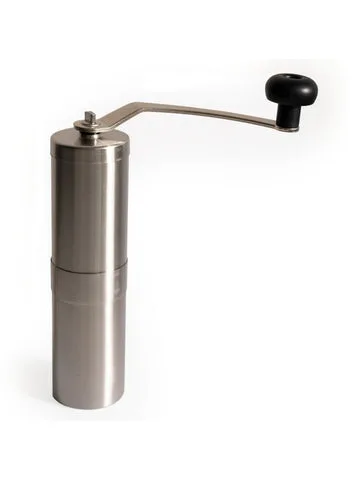
The crank attachment has been improved from a pentagonal nut to a flat, lightly spiralled wing nut. The pentagonal nut on earlier Porlex models wore out quickly and was the most common build-quality complaint; the new design is meaningfully better, though some owners still report a slight notch forming after heavy use.
Workflow and Daily Use
Single-dose workflow is straightforward. Load up to roughly 30g of beans, reattach the handle, and grind. The 30g capacity is genuinely useful for brewing a full 500ml pour-over for two, which the Mini cannot do without two passes.
Grinding is slow. Ceramic burrs demand more torque per revolution than steel, and the 30mm diameter is small relative to the 38–40mm cones you'll find on competitors like the 1Zpresso Q-Air. Realistically, expect around 30–45 seconds for a 20g dose at a pour-over setting. It is not painful, but it is not quick either.
There is no anti-static treatment, which is the Tall II's most annoying everyday flaw. Grounds cling to the inside of the bin and the lower body, and you will find yourself tapping the grinder against the counter to dislodge them.
Several owners resort to the classic "drop of water on the beans" trick, which works but feels like a workaround you shouldn't need.
Who It Suits
The Tall II makes sense for a specific buyer: someone who values Japanese-made construction and a slim, attractive object on the counter, who primarily brews pour-over at medium grinds, and who is not chasing the last word in clarity.
It is also a credible secondary grinder for travel if you want something with more capacity than the Mini.
It is not the right pick if you are buying your first serious hand grinder at this budget. For $65–$85 you can step into a steel-burr grinder that grinds faster, cleaner, and with more repeatable adjustment.
The Timemore Chestnut C3 and the Kingrinder K2/K4 are the usual recommendations, and they outperform the Tall II in particle distribution and grind speed by a clear margin.
The Hario Skerton Pro is a closer comparison in philosophy and price, and even it has a slight edge on grind consistency thanks to its adjustable burr mount.
Espresso is off the table. The stepped adjustment does not go fine enough, and the ceramic burrs produce too many fines at the bottom of the range to pull a reasonable shot.
Value
At $65–$85, the Tall II is priced like a modern budget hand grinder, but it competes against products that have moved past it. The build quality justifies a premium over plastic-body alternatives, and "Made in Japan" is not nothing.
But the grind performance simply does not keep up with steel-burr competitors at the same money, and the lack of anti-static is a real daily annoyance in 2025.
You are paying partly for heritage and partly for the slim stainless form factor, and that is a legitimate reason to buy one, but it is not a value play.
Buy the Porlex Tall II if you want a slim, Japan-made stainless grinder for medium-grind pour-over and you value the aesthetic and the capacity bump over the Mini II. Skip it if you are buying your first serious hand grinder at this budget: a Timemore Chestnut, 1Zpresso Q-Air, or Kingrinder K2 will grind faster, cleaner, and with better adjustment for the same money, and the Tall II cannot do espresso.
Hassan is a software developer with a coffee problem. Coffee Grinder Index is his attempt to solve it — one grinder at a time.