Mazzer Mini Review
Cafe workhorse scaled down. 58mm flat burrs built to last.
What We Love
Room for Improvement
Technical Specifications
| RPM | Fixed 1600 |
| Retention | ~3g |
| Motor Power | 250W |
| Weight | 9000g |
| Bean Capacity | 600g |
Grind Quality
The 58mm flat steel burrs are the heart of this machine, and they produce exactly the kind of espresso grind you would expect from a Mazzer. Particle distribution is tight, body is full, and traditional Italian-style darker roasts sing through it.
It is a fixed-speed grinder at 1600 RPM, which is on the faster side for flat burrs and contributes to a slightly more unimodal but somewhat fluffier grind than slower competitors.
Where it falls short is with lighter, modern specialty roasts. Our multiple tests resulted in inconsistent extractions and the need to fiddle where other flat burrs simply deliver.
Years on the Mini make the frustration plain: with certain light roasts it is a total pain, choking at 15g in the morning and pulling fine in the afternoon.
Mazzer now offers optional burrs said to suit lighter coffees, but out of the box the stock set is tuned for medium-to-dark.
Build Quality
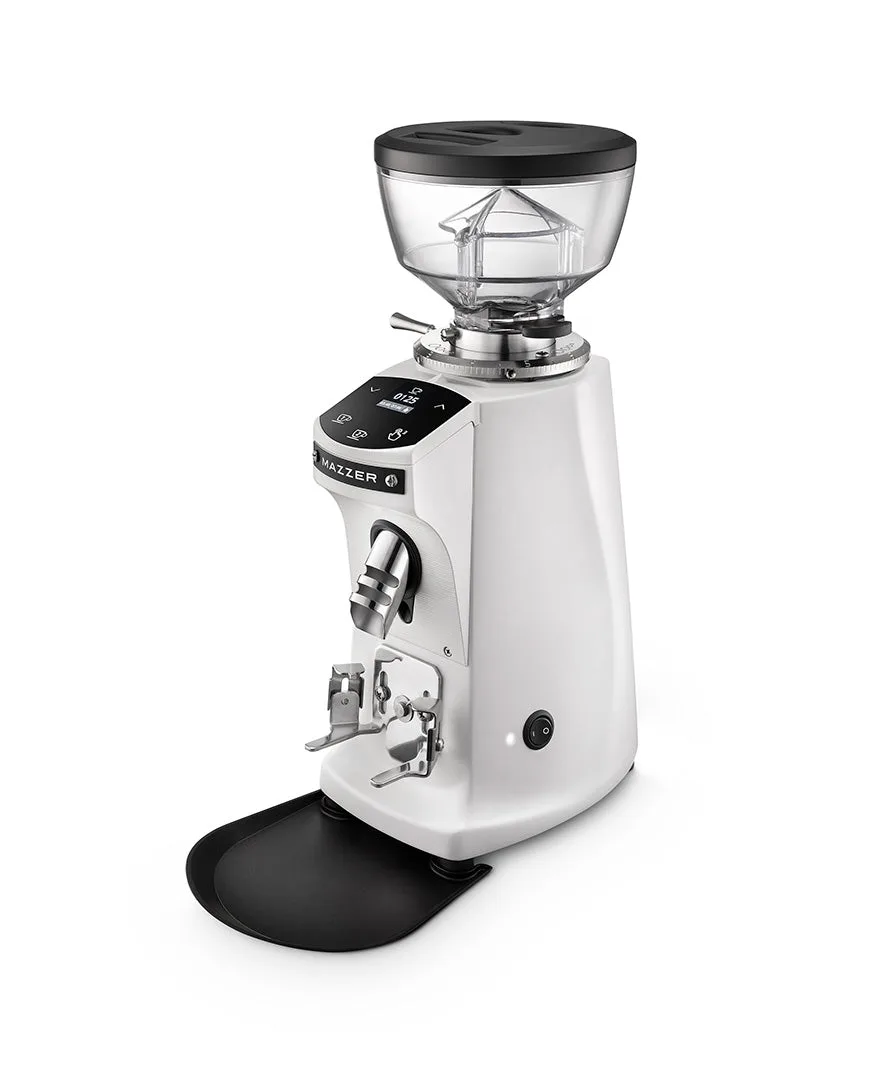
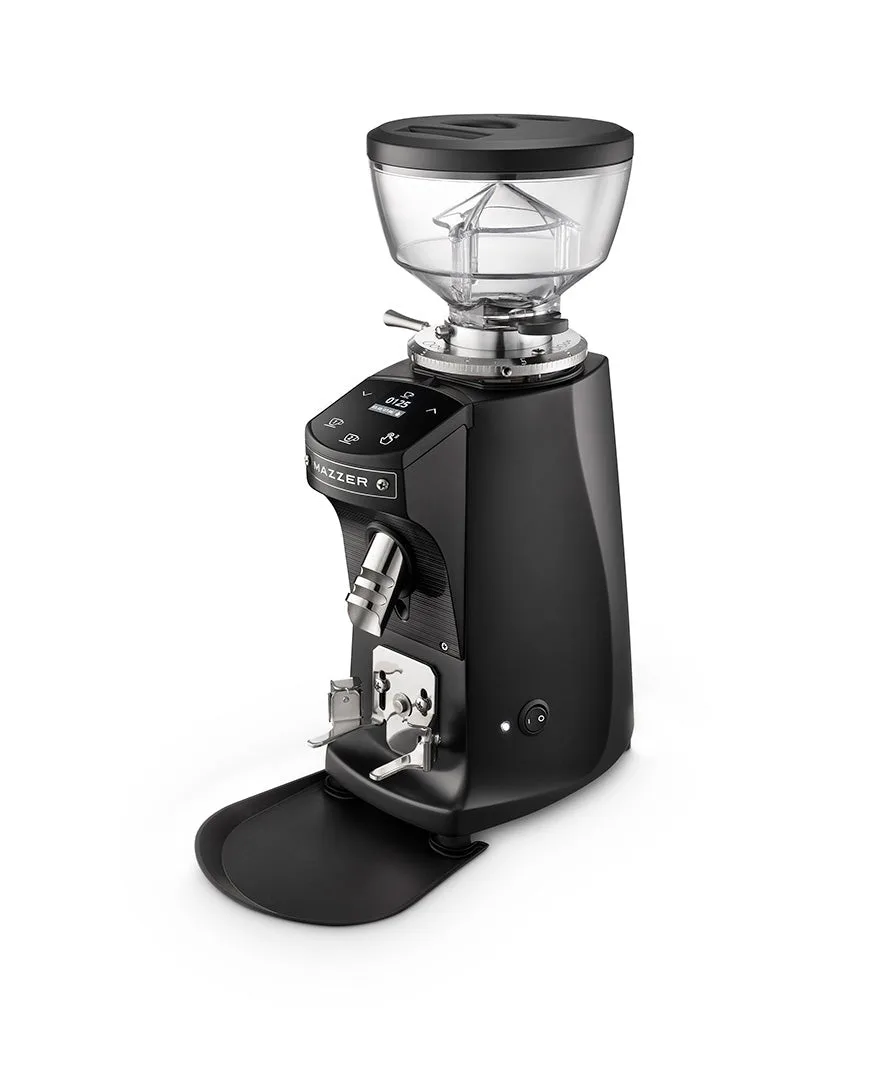
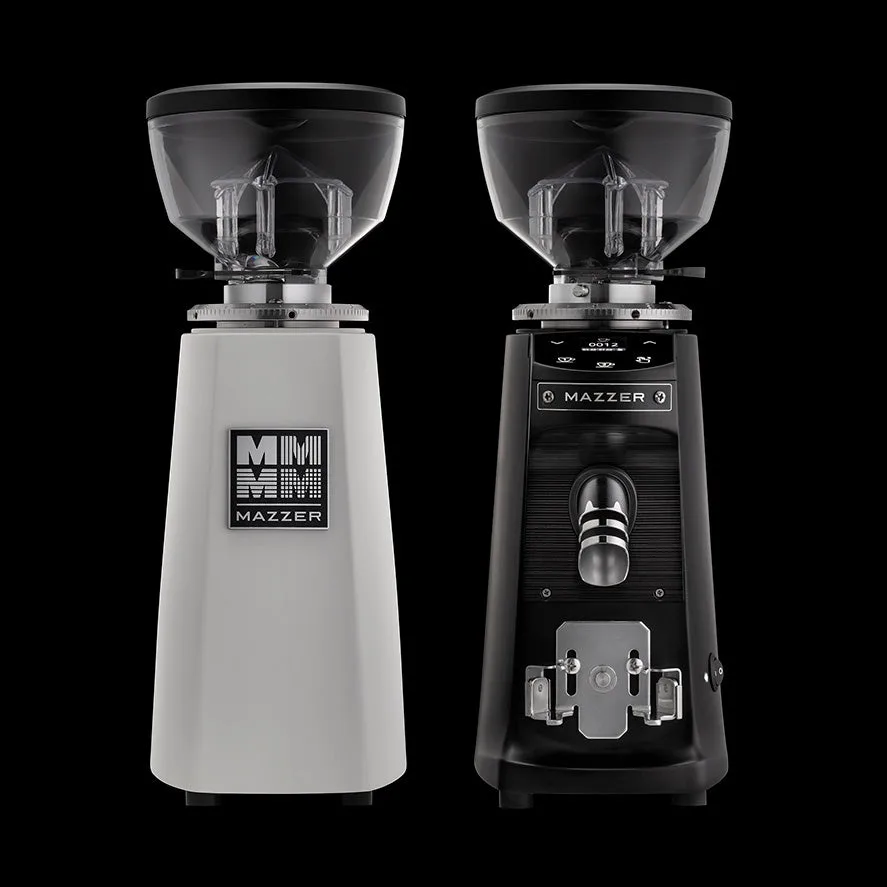
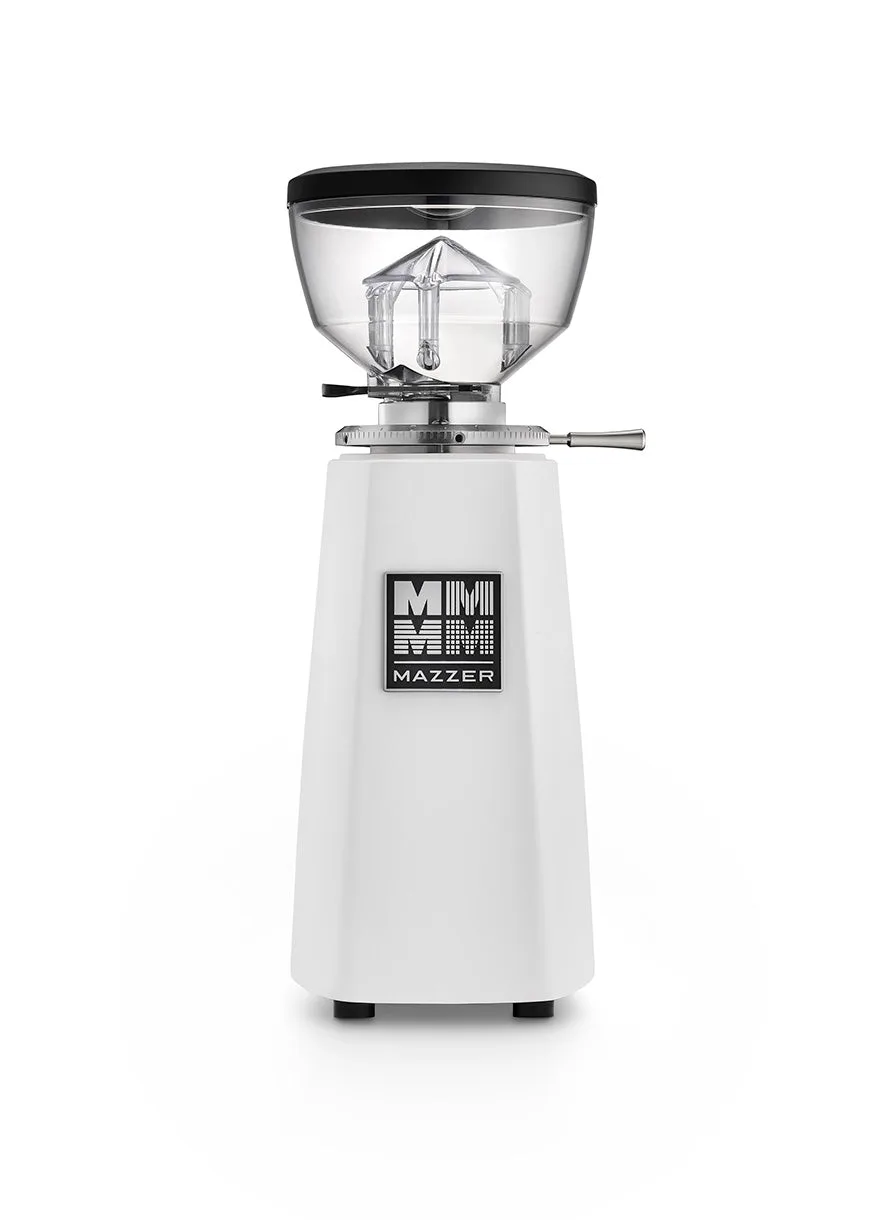
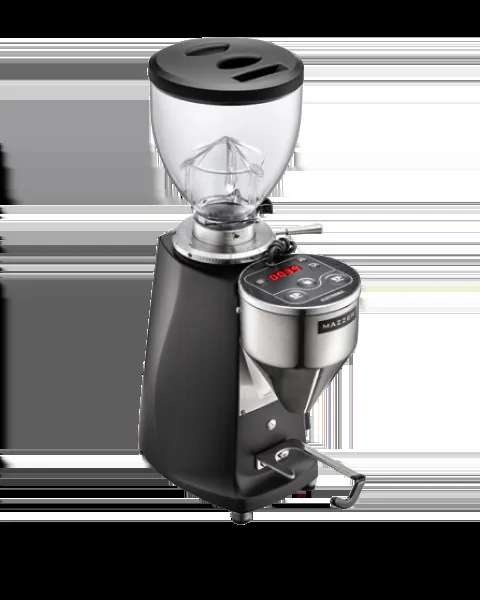
This is where the Mini earns its reputation. At 9kg of die-cast aluminum, it is genuinely overbuilt for a home kitchen. Tom's Coffee Corner calls the body "stately, eloquent," and the integrated S-curve that catches the light is a nice touch in a category full of plastic boxes.
Rubber feet are thick, the hopper lid is rubberized, and the portafilter forks are a robust piece of metal that can be swapped for different depths.
Long-term owners report a decade-plus of service with minimal intervention. One of the user i talked to, has had theirs since the early 2010s and still marvels at the build every time they disassemble it for cleaning. Parts and replacement burrs are readily available, which matters when a grinder is built to be serviced rather than replaced.
Workflow
This is a hopper grinder, and it behaves like one. The new capacitive touch display is a clear upgrade, with programmable 1-cup and 2-cup timed doses that you set by holding the button. There is a 20-second maximum grind window, which sounds restrictive but is more than enough for a double basket.
The retention figure on this site is around 3g, but real-world use tells a harsher story. A two-week test paired with a Linea Micra measured fixed internal retention closer to 8g once the grinder was seasoned, and any grind size change takes one or two grinds to propagate through the chamber.
The chute has no anti-static treatment, which is a real omission in 2024. Static and clumping are noticeable, especially with the fluffy grind the fast RPM produces.
Who It Suits
If you run a small café, a market stall, or a home setup where you commit to one coffee for weeks at a time, the Mini is a workhorse that will outlast most of its owners.
The grind-by-weight Mini G exists for users who want dosing precision without switching workflows, and for that crowd it is a genuinely compelling package.
If you are a home barista who switches beans often, chases light roasts, or wants near-zero waste, the hopper design will frustrate you. Compared to a Eureka Mignon Specialita at roughly half the price, the Mini is louder, retains more, and clings to a workflow that the home market has moved away from.
The Lelit William PL72 offers a similar flat-burr experience with much lower retention for similar money, and the Ceado E37S in a similar price bracket is a quieter, more modern take on the same idea.
Noise and Daily Use
At 250 watts driving flat burrs at a fixed 1600 RPM, the Mini is loud. It is not the loudest grinder in its class, but the 9kg chassis does very little to damp the motor noise, and anyone in an open-plan apartment will hear it through a closed door.
There is no spec sheet dB figure in the research, and without a measured number this is a judgement rather than a score.
Daily ergonomics are otherwise solid. The portafilter forks cradle a 58mm basket cleanly, the on-off toggle has a satisfying click with an LED indicator, and the die-cast body stays planted on the bench.
Cleaning is straightforward thanks to the straightforward design, though the lack of anti-static means you will be tapping and brushing the chute more than you would on a modern single-dose grinder.
Value
At $500-$700 you are paying for the Mazzer name, the Italian build, and the certainty that the grinder will still be working in 2035. That is a real proposition, and for the right buyer it is money well spent. For everyone else, the value calculation is harder.
A Baratza Forte AP covers similar espresso territory with grind-by-weight for less, and the Specialita mentioned earlier is a fraction of the price for home use.
The Mini is not a bad grinder. It is a focused one, and the focus has shifted away from where most home buyers are heading. Buy it for the build and the workflow, not for the latest features.
Buy the Mazzer Mini if you run a small commercial operation or a home setup where one coffee gets pulled dozens of times a day, and you want a grinder that will genuinely outlast you. Skip it if you are a single-dose home barista who switches light roasts often, or if low retention and quiet operation matter to you; a Lelit William or Ceado E37S will fit that workflow better for similar money.
Hassan is a software developer with a coffee problem. Coffee Grinder Index is his attempt to solve it — one grinder at a time.