Kinu M47 Simplicity Review
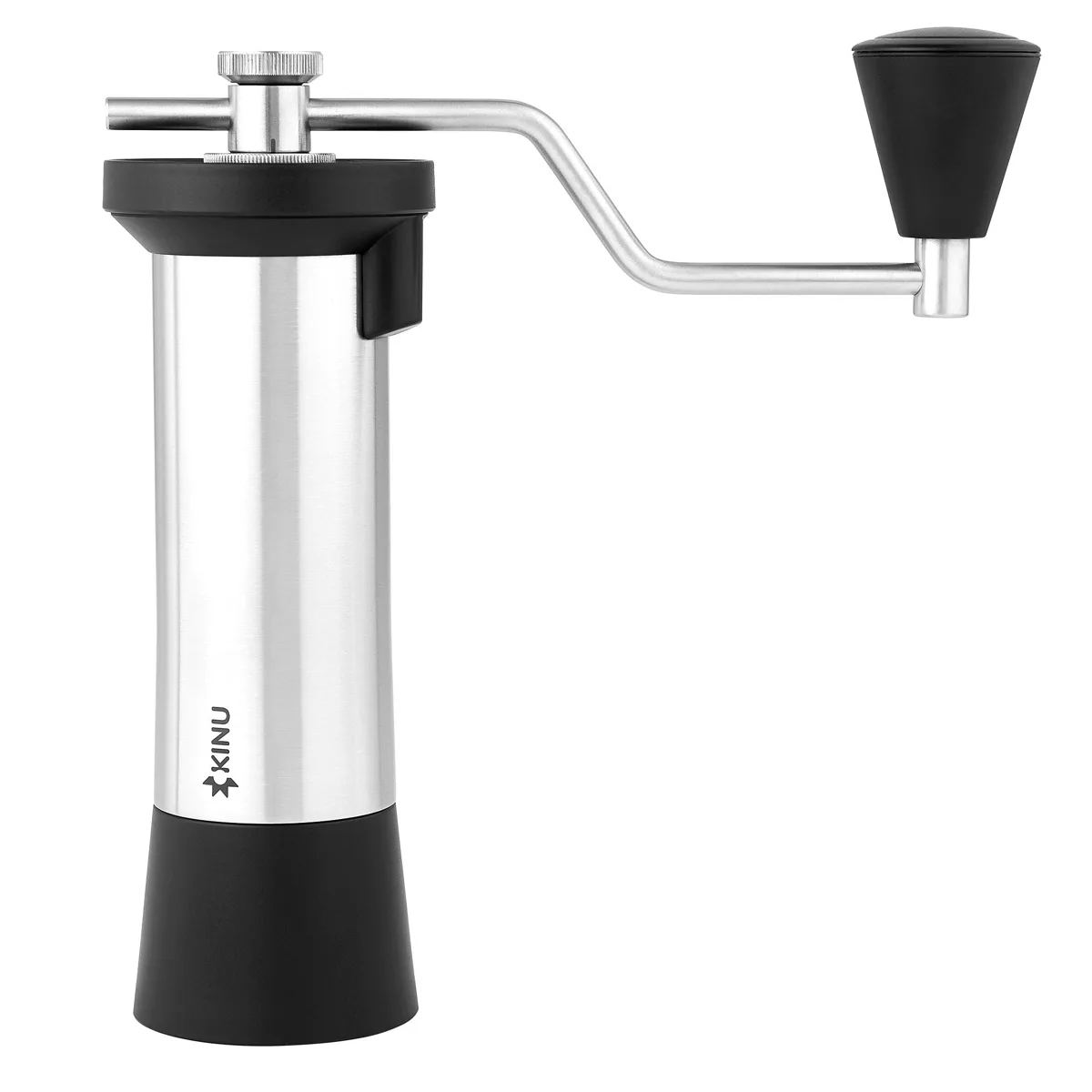
The middle ground M47. German-made with hardened Black Fusion steel burrs and a refined catch cup design.
What We Love
Room for Improvement
Technical Specifications
| Weight | 700g |
| Bean Capacity | 40g |
Grind Quality
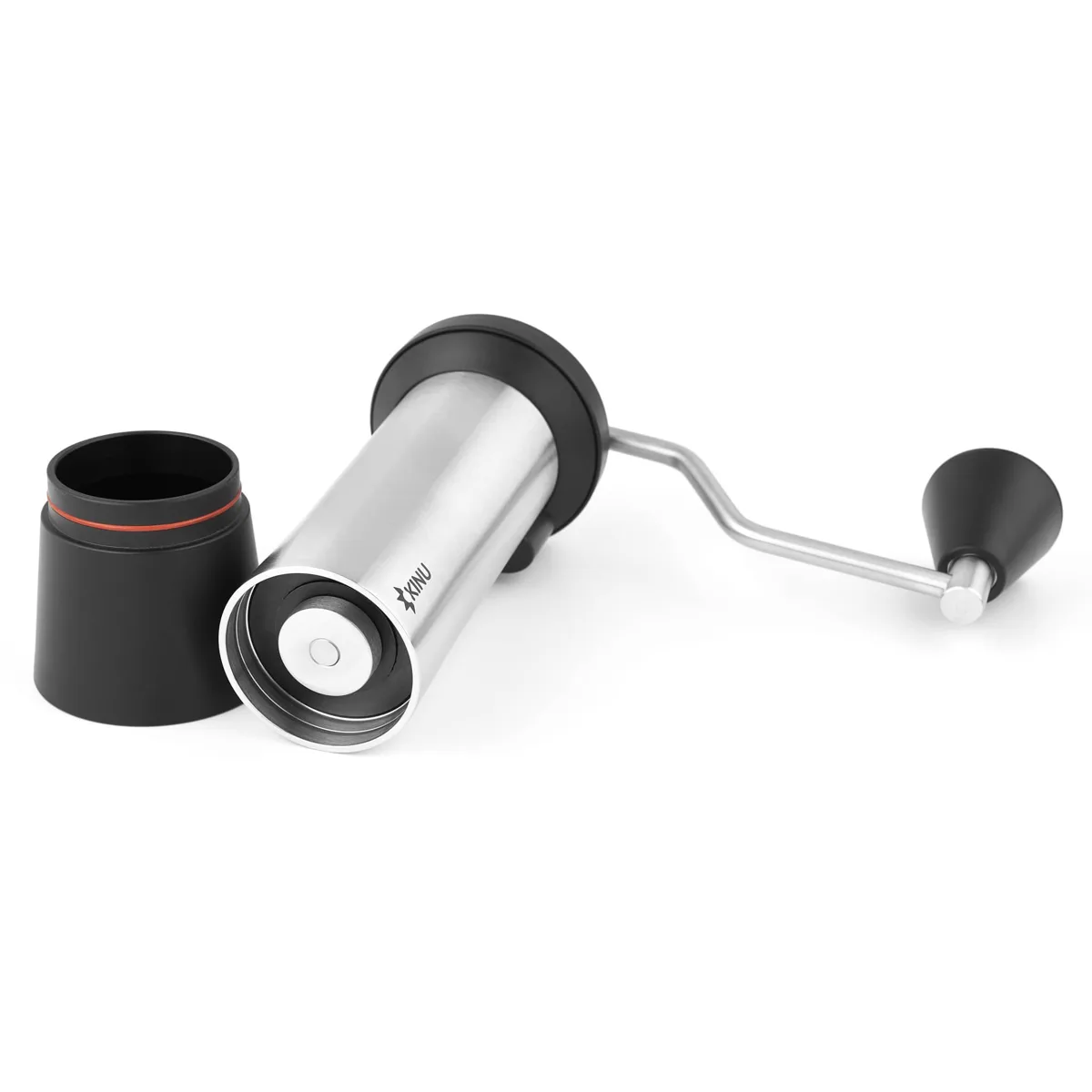
The 47mm conical steel burrs are the headline feature, and for the most part they earn it. At espresso settings, the M47 pulls shots with a clarity and sweetness that rivals electric grinders costing two or three times as much.
Distribution in the portafilter is even, and the shot-to-shot consistency holds up across a session of back-to-back pulls. The grind leans toward clarity rather than body, which is a useful thing to know if you tend toward modern, light-roast espresso.
The stepless adjustment gives you genuinely fine control at the espresso end of the dial. The catch-cup design is clean, and the 40g capacity is right-sized for a single dose into a 58mm portafilter.
One thing worth flagging from the wider community: there is a documented pattern of burr alignment drift after roughly a year of use, where the zero point shifts and grind consistency collapses. Kinu's customer support has not been responsive when owners have reported it, which is a real concern for a grinder at this price.
Build and Feel
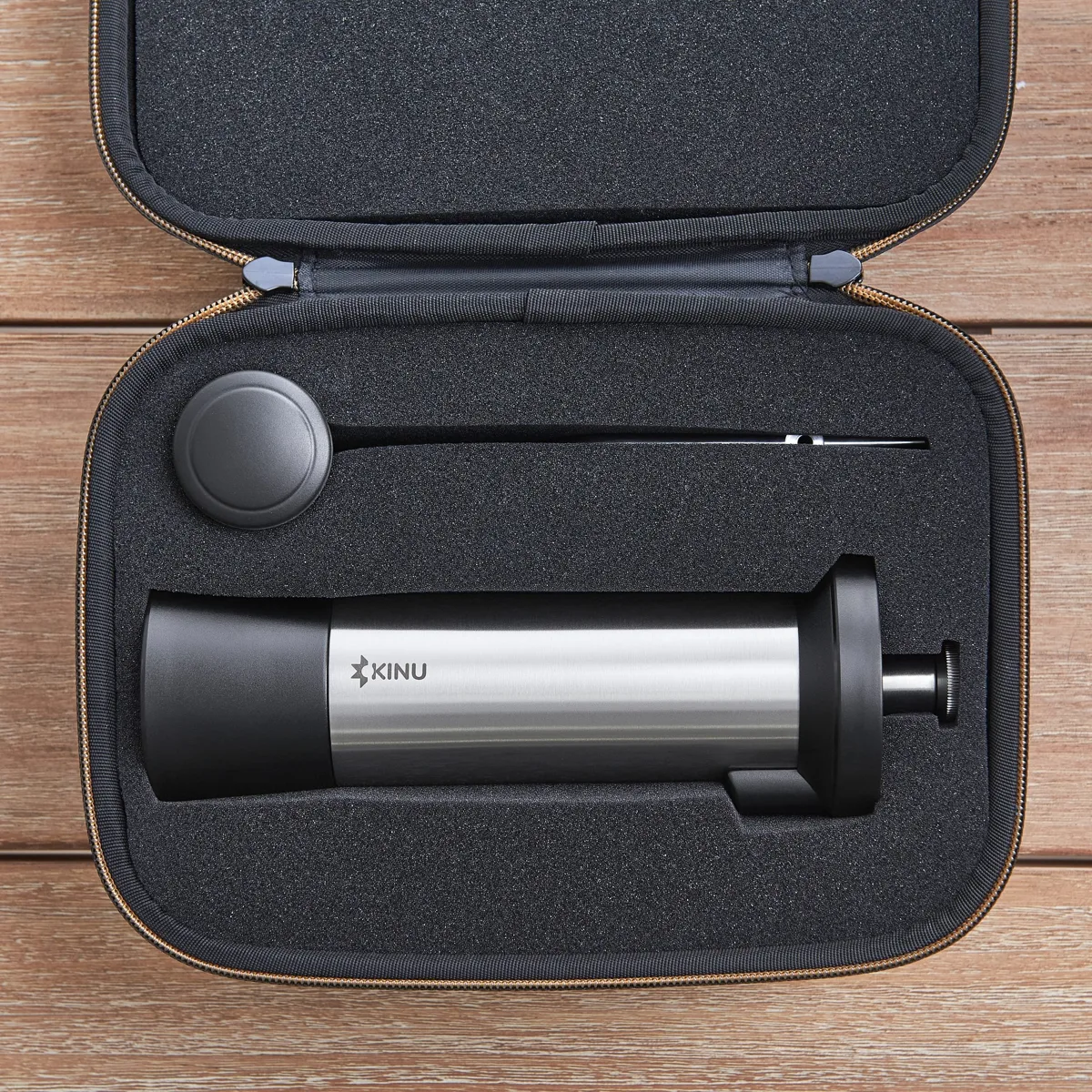
Made in Germany, with a stainless steel body, a brass core, and four ball bearings on a stainless axle. It feels overbuilt for a hand grinder, and at 700g it is heavy. You notice that weight on your wrist during a double-shot grind, which takes around 90 crank revolutions.
The body is grippy enough to hold steady on a countertop, though the grinder does want to wander a little on smooth surfaces.
There is no anti-static treatment, and you will see some static cling in dry conditions. Grounds stick to the inside of the catch cup and to the burr exit, which means a few taps and a brush between doses.
For a single-dose workflow this is mildly annoying rather than a deal-breaker, but it is a real step behind something like the 1Zpresso X-Ultra on daily cleanup.
Workflow in Daily Use
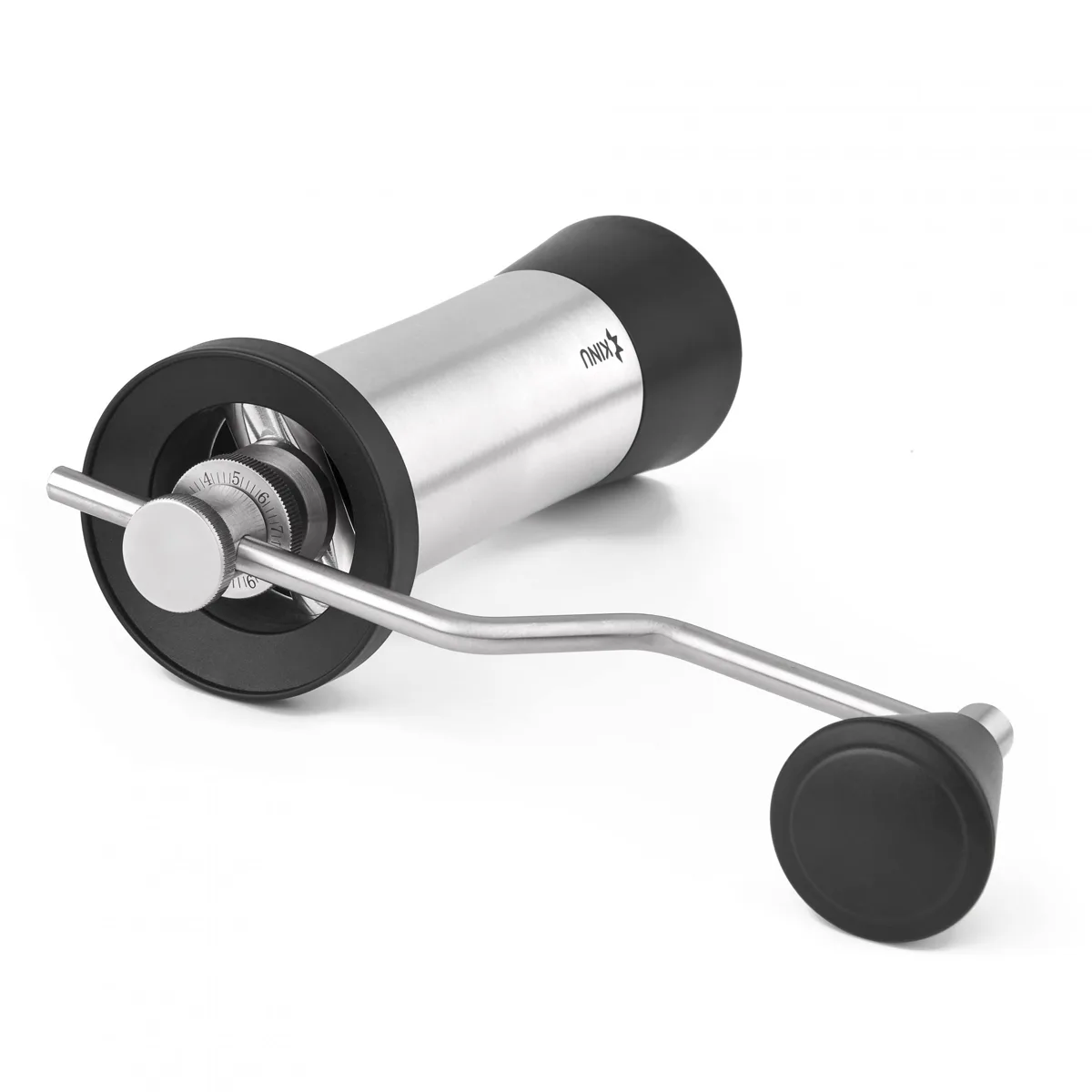
The adjustment wheel sits under the crank handle and is locked with a thumb screw. It is precise, easy to read, and once locked it does not slip mid-grind. That part of the design is genuinely good.
The downside is that the wheel sits where the handle attaches, so swapping between brew methods means removing the handle, loosening the lock, dialing in, and reattaching. It is a minute of fiddling, and you do it often enough to notice.
Single-dose workflow is the intended use case. You weigh your beans, grind directly into the cup, tip into your portafilter, and go. The 40g capacity is a touch tight if you brew larger batches, but for one or two espresso shots it is exactly right.
The crank itself is smooth, and the bearing stack keeps the burrs stable under load. There is no plastic in the burr path, which is a quiet plus for longevity.
Who It Suits
Home espresso drinkers who already know they want a hand grinder and who will use it three or four times a week, not several times a day. The grind quality at espresso is the main reason to pick it over cheaper alternatives, and if espresso is your only brew method you will be well served.
If you split your time between espresso, pour-over, and French press, the stepless dial and the single-dose workflow still work, but you will be paying for espresso precision you only use part of the time. Travel is also worth mentioning.
At 700g this is not a grinder you toss in a carry-on for a weekend trip. The Comandante C40 MK5 is lighter and arguably better suited to a mobile workflow, though it gives up some espresso finesse.
How It Compares
Against the Kingrinder K6, the Kinu is the more precise machine but costs roughly twice as much, and the Kingrinder is no slouch at espresso. Against the Kinu M47 Phoenix, you are choosing between a slightly different burr set and finish, not a fundamentally different grinder.
The 1Zpresso X-Ultra is the most direct competitor in this price bracket, and arguably the safer bet given the alignment issue and support concerns above.
The honest summary: excellent grind quality, real build, but a known long-term reliability question and a price that leaves no room for excuses. If you are buying used, factor in the cost of a possible replacement within two years. If you are buying new, the warranty and support experience will matter more than usual.
The M47 is a strong pick for home espresso drinkers who want a dedicated single-dose hand grinder and who value grind clarity over convenience. It is less suited to anyone who grinds multiple brew methods daily, travels with their grinder, or wants the reassurance of a long warranty. The documented alignment issue and weak customer support are real risks at this price, and buyers should weigh them carefully before committing.
Hassan is a software developer with a coffee problem. Coffee Grinder Index is his attempt to solve it — one grinder at a time.