Kingrinder K0 Review
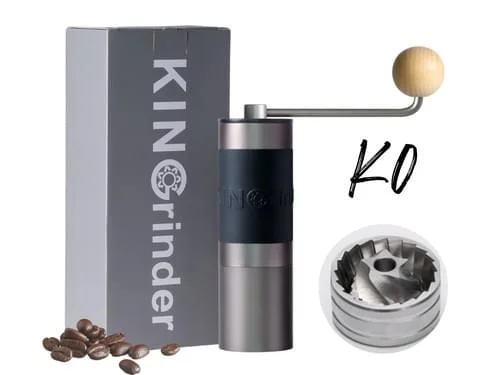
The most affordable Kingrinder. 38mm burrs with internal adjustment, a perfect gateway into hand grinding.
What We Love
Room for Improvement
Technical Specifications
| Weight | 380g |
| Bean Capacity | 20g |
Grind Quality
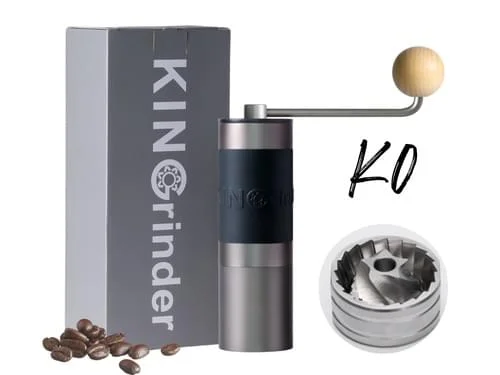
The 38mm conical steel burrs are small by hand grinder standards, and you feel that in the cup as much as on the wrist.
Compared to the 48mm burrs in the 1Zpresso K-Ultra or even Kingrinder's own K6, the K7 simply can't move as much coffee per revolution, and the particle distribution is wider as a result.
Our four-month test noted a slight drying aftertaste that lingered at finer settings, and the K7 never quite matched the clarity of a 1Zpresso ZP6 despite carrying a similar-looking burr geometry.
For pour-over at its intended price point, the cup is clean and balanced, and a clear step up from ceramic-blade hand grinders or entry-level options like the Hario Mini Slim Plus. It's just not the revelation the early hype suggested.
Build and Adjustment
The aluminum body feels reassuringly solid in the hand for a sub-$50 grinder, and at 380g it's light enough to toss in a bag without thinking about it.
Stepped adjustment with internal collar access means you set your grind by feel rather than dialing a precise number, which is forgiving for beginners but limiting once you start chasing recipes.
The internal adjustment ring is a usability compromise. Reaching it requires removing a rubber sleeve, and as many users flagged that leaving the sleeve in place causes calibration drift between grinds.
Once you know to strip it off, the system works, but it's not as clean an experience as the external dials on the 1Zpresso Q2 or the K6.
Daily Workflow
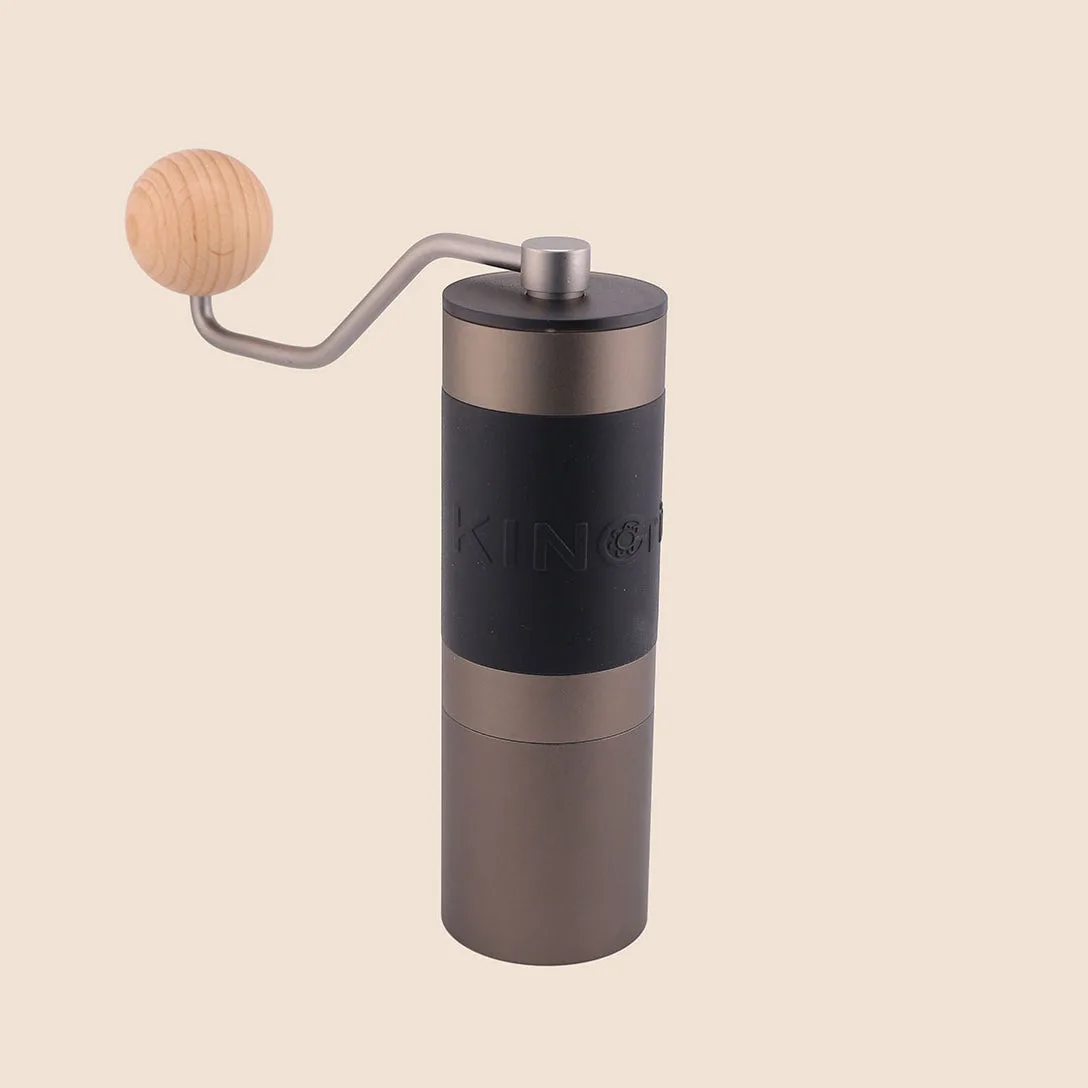
Single-dose use is the obvious fit. The 20g capacity is right-sized for one V60 or two cups, and the bayonet catch cup locks quickly once you learn the angle. There's no anti-static treatment, so a few grounds cling to the walls after each grind, but a quick tap dislodges them.
Grinding is slow. Smaller burrs and stepped adjustment both conspire to make this a 60-90 second workout depending on dose and setting. It's not unpleasant, but if you're used to larger conical burrs or own an electric grinder for backups, the difference is noticeable.
Who It's For
This is a genuine entry-level grinder for someone moving off a blade grinder or a basic ceramic burr model. The price undercuts almost every credible alternative with steel conical burrs, and the cup quality is meaningfully better than anything cheaper.
If your daily driver is a V60, Aeropress, or French press, the K7 will serve you well.
Espresso is theoretically within the grind range but practically not the use case. The stepped adjustment lacks the fine resolution you'd want for dialing in, and the slow grind speed makes pulling shots feel like a chore.
If espresso is even a possibility, the K6 or a used 1Zpresso Q-Air is worth stretching the budget for.
How It Stacks Up
At $35-50, the competition is mostly the Hario Skerton Pro and other budget hand grinders with smaller or ceramic burrs. Against those, the K7 wins convincingly on grind consistency and build quality.
Against anything in the 1Zpresso lineup or Kingrinder's own K6, the gap narrows or reverses on cup quality, even though the K7 holds its own on workflow and price.
The honest summary: it's a real grinder, not a toy, and a smart first purchase. It just isn't the ZP6 replacement the internet wanted it to be.
The Kingrinder K7 is the right pick for someone buying their first real hand grinder for pour-over or immersion brewing on a tight budget. It produces a clean, balanced cup and feels built to last, making it a clear step up from blade grinders or entry-level ceramic models. Skip it if you want to pull espresso, already own a 1Zpresso, or expect ZP6-level clarity at half the price — that promise hasn't quite landed.
Hassan is a software developer with a coffee problem. Coffee Grinder Index is his attempt to solve it — one grinder at a time.