JavaPresse Manual Coffee Grinder Review
Amazon's #1 bestselling hand grinder. Ceramic conical burrs with 18 click settings. The gateway drug into specialty coffee.

What We Love
Room for Improvement
Technical Specifications
| Weight | 240g |
| Bean Capacity | 30g |
Grind Quality
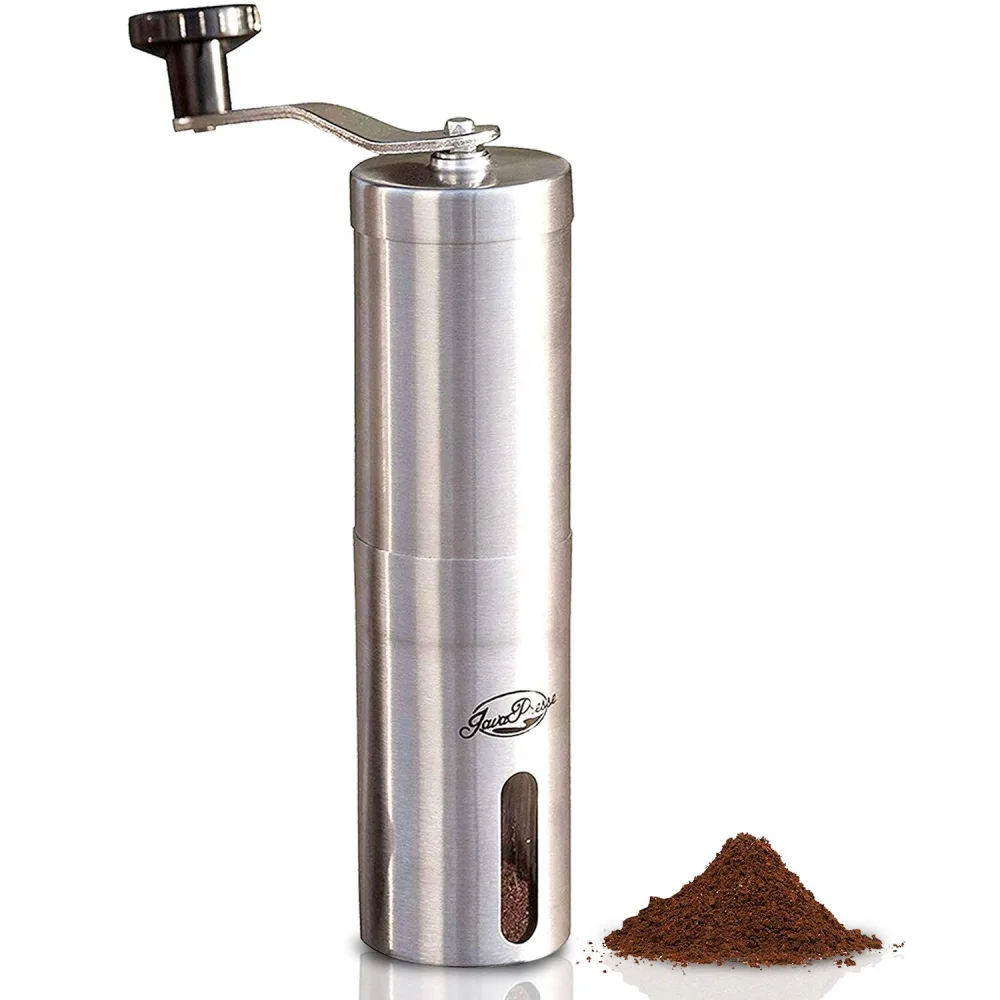
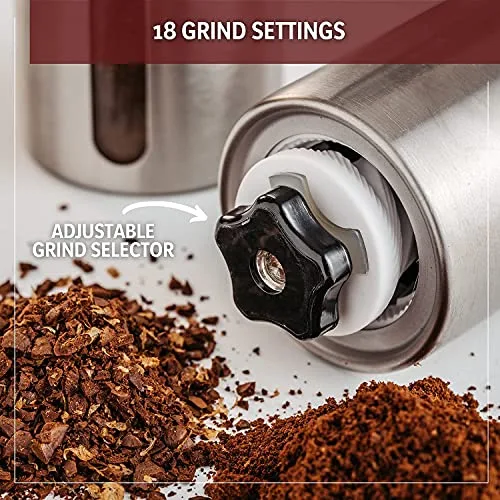
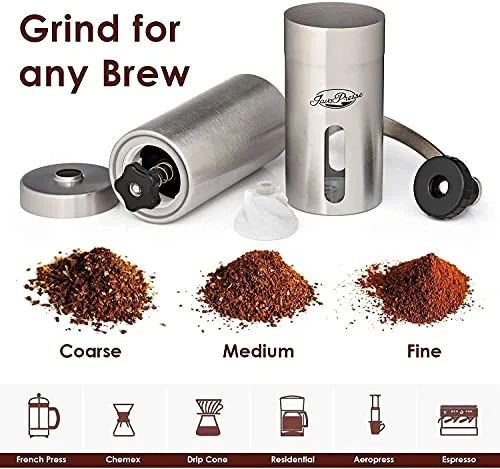
The JavaPresse uses a 38mm conical ceramic burr, which is a respectable size for a grinder in this price bracket, and the 18 stepped settings cover a usable range from espresso-fine to French-press-coarse. In practice, the burr produces genuinely good results at the finer end of the dial.
Our blind taste testing put pour-over cups from the JavaPresse on par with those from the much pricier OXO, we reached a similar conclusion that of many other userss when brewing V60 and drip. The catch, and it is a significant one, is what happens as you move coarser.
Multiple owners on the r/Coffee thread report heavy fines at medium-coarse settings, with one user describing a single Chemex brew where roughly two-thirds of the grind came out fine enough to clog the filter.
Burr wobble — a symptom of insufficient stabilisation at the shaft — is the most commonly cited cause, though at least one owner cured the problem with a couple of washers under the adjustment knob.
Ceramic itself is also softer than steel, so the burrs will lose their edge faster than metal alternatives and grind consistency drifts further over time.
There is no anti-static treatment on the grinder, and the 30g bean capacity is on the small side for a pour-over session — you will get one generous cup per load, maybe two at a push.
Build and Design
The body is brushed stainless steel with a glass jar at the base, and the whole thing weighs just 240 grams. It feels solid rather than premium — the seams and friction-fit sections are functional but not precision-machined — and the slim cylindrical shape genuinely does slip into a bag or suitcase without complaint.
We also compared it directly to a Kyocera and found the JavaPresse noticeably lighter and easier to pack, while describing it as "near indestructible" for travel purposes. The clear glass lower chamber has narrow viewing windows so you can eyeball how much you have ground, which is a small but useful touch.
The stepped adjustment ring at the base is simple to turn, though 18 clicks spread across the full grind range means each step covers a relatively wide range of microns. For a beginner who is not yet chasing espresso perfection, that is forgiving.
For anyone trying to dial in a specific recipe, it is a limitation.
Daily Workflow
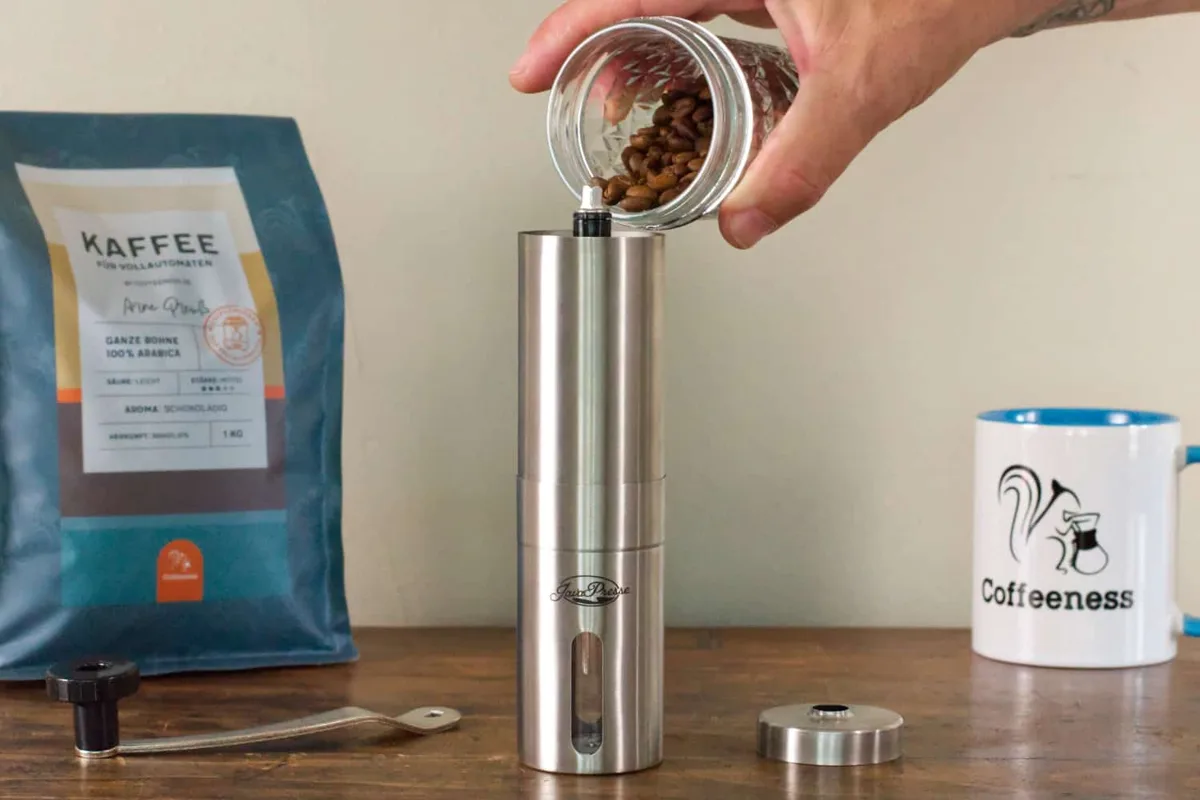
Single-dose is the only sensible workflow here given the 30g hopper, and that is what the grinder is set up for. The tradeoff is speed. I would call it "very slow," and our stopwatch put it at over five minutes for enough coffee for one decent cup.
That is not a dealbreaker for a morning pour-over — some people genuinely enjoy the ritual — but it is worth knowing before you buy. If you are grinding for two or more people, the arm workout becomes a real consideration.
One thing the JavaPresse does deliver on is noise. The ceramic burr is genuinely quiet, the crank action is smooth, and there is no motor hum because there is no motor.
Early-morning or shared-office grinding is realistic in a way that an electric grinder at the same price point would not be.
Who It Suits
This is the grinder to buy if you are curious about specialty coffee, want something that will not break the bank, and are not yet sure how deep the rabbit hole goes.
At sub-$30 it costs less than a couple of bags of decent beans, and the pour-over results at finer settings are genuinely impressive for the money. It is also a strong travel and camping pick — light, quiet, and durable enough to throw in a bag.
It is not the grinder to buy if you already know you want consistent results across the full grind range, if you brew coarse methods like French press or full-immersion cold brew, or if you are making coffee for more than one person at a time.
The burr wobble and ceramic wear mean the JavaPresse rewards a forgiving brew method and punishes a demanding one. If you are willing to spend roughly three times the price, the 1Zpresso Q2 is the most obvious step up: steel burrs, better stabilisation, and a meaningfully wider usable range.
The Hario Skerton Pro sits closer in price and is a worthwhile comparison if you want a slightly larger capacity. For a more compact travel option with better consistency, the 1Zpresso Q-Air is worth a look.
Comparison at the Price
Nothing else on the market at $25–$40 combines this build quality, a real conical burr, and 18 adjustment steps. The trade is consistency at coarser settings, and that is the honest limitation.
For a first grinder it is hard to argue with, and the low cost of entry means you can spend the money you save on better beans, which will do more for your cup than any grinder upgrade at this level.
The JavaPresse is the right grinder for a complete beginner who wants to try pour-over or drip coffee without spending much, and it doubles as a capable travel or camping grinder thanks to its light, quiet build. It is not the right choice for anyone who needs reliable results at coarser settings, brews for more than one person, or expects the consistency and longevity of a metal-burr grinder. Treat it as a gateway, not a destination.
Hassan is a software developer with a coffee problem. Coffee Grinder Index is his attempt to solve it — one grinder at a time.