Fellow Opus Review
Versatile conical burr grinder for espresso to cold brew.
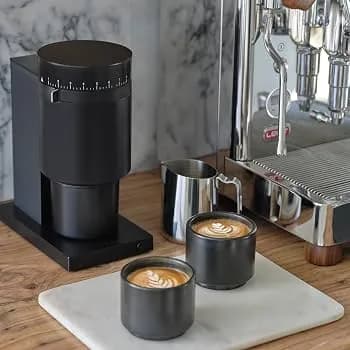
What We Love
Room for Improvement
Technical Specifications
| RPM | Fixed 320 |
| Retention | <1g |
| Motor Power | 120W |
| Weight | 3200g |
| Bean Capacity | 110g |
| Anti-Static | Yes — Ionizer / Anti-static system |
Where the Fellow Opus Fits
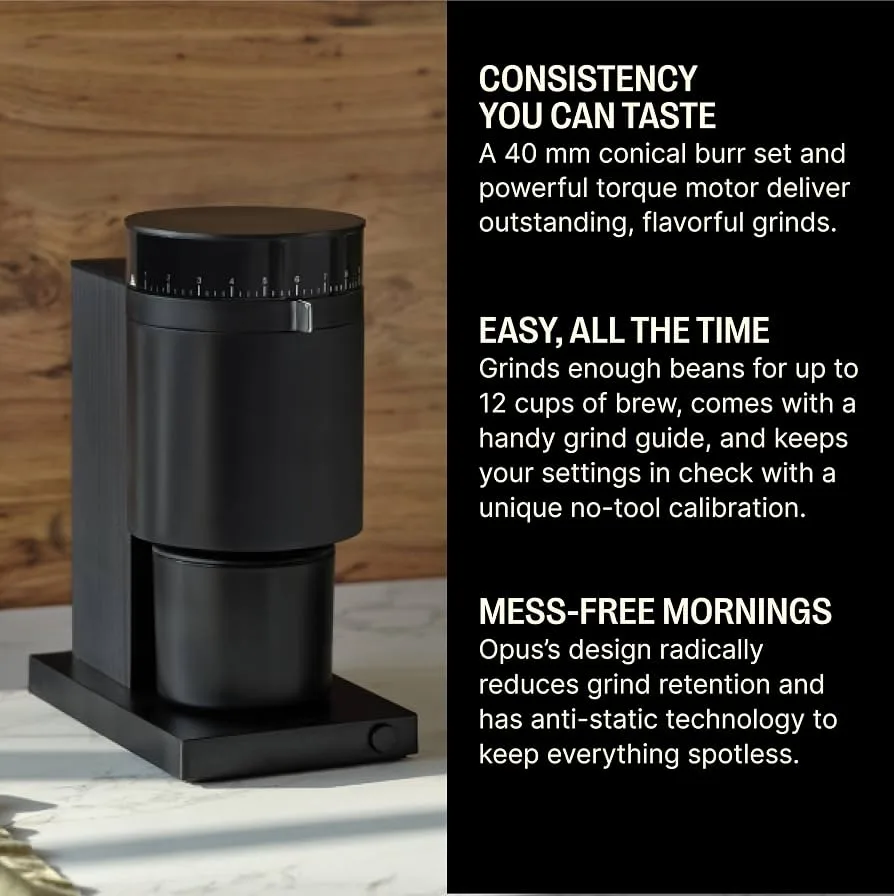
The Fellow Opus arrived in 2023 as a deliberate answer to a simple question: can you get real espresso capability under $200? At a retail of $195–$225, it is one of very few electric grinders in this bracket with a genuine espresso-to-cold-brew range, and that alone explains why it became so widely discussed.
The trade-off is that it is a conical design, not a flat one, and it is built around a plastic shell rather than the metal housings Fellow uses on the Ode line.
If you are weighing it against the Breville Smart Grinder Pro or the Baratza Encore ESP, the Opus is the most design-forward of the three, and the most opinionated about workflow.
Grind Quality
Conical burrs have a reputation for producing a slightly less uniform particle distribution than equivalently sized flat burrs, and that reputation holds at the Opus's price point. Across filter brew methods the cup is clean and consistent, and the 40 mm conical set is more than capable for pour-over, French press, and Aeropress.
For espresso, the stepped adjustment is wide enough — 40+ settings spanning espresso to cold brew — that finding a workable shot is straightforward, though dialling in within a single setting is not as granular as a stepless or finely stepped competitor.
We found the grind quality "game-changing" for the sub-$200 category, which is fair praise; our first look was more measured, noting conical's inherent particle-distribution trade-off. Either way, you are getting a meaningful step up from a blade or cheap flat-burr grinder, and a meaningful step down from a dedicated espresso grinder.
Build and Everyday Use
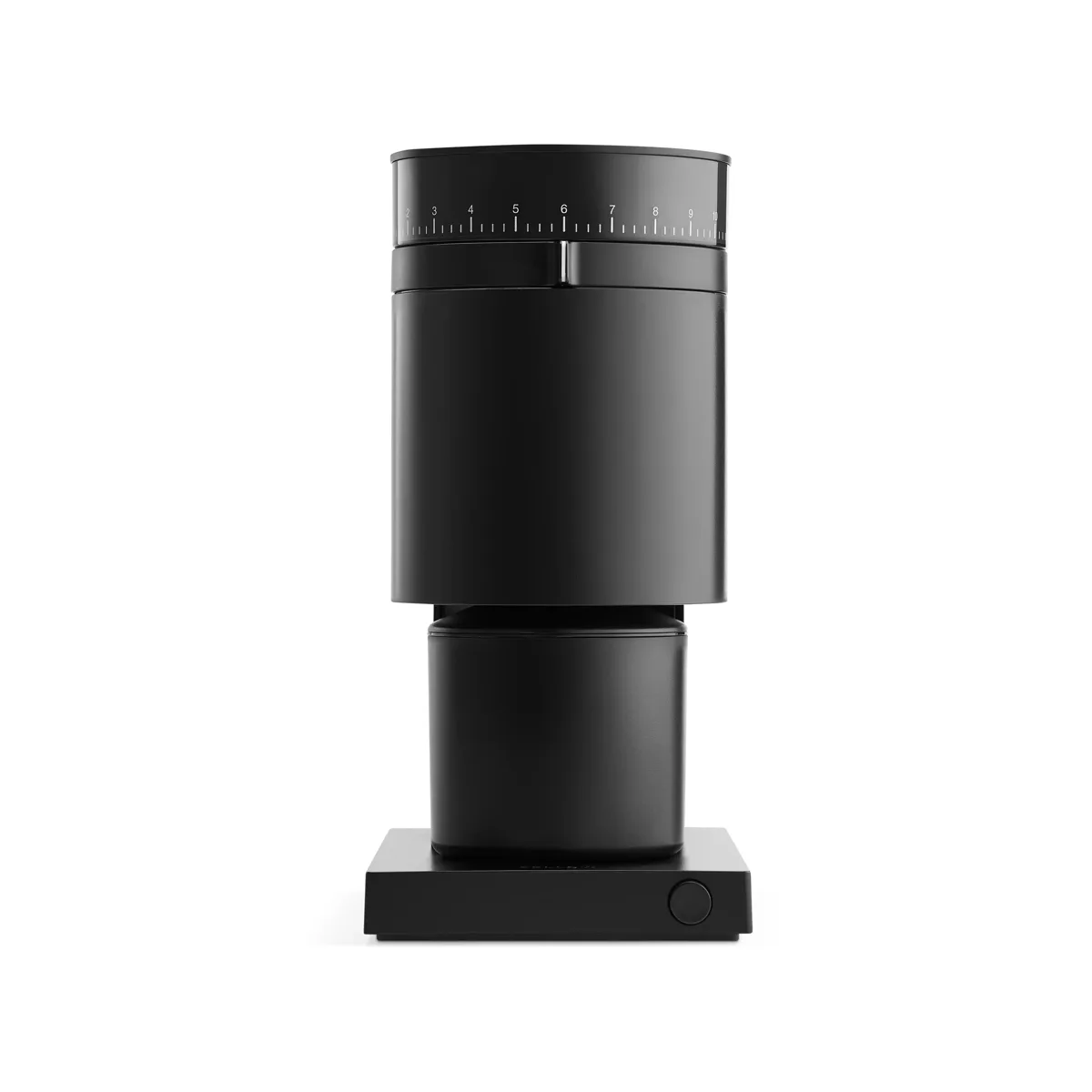
The all-plastic outer shell is the most obvious cost cut. It's as a small disappointment i would like to flag, and the base plate does scratch with use.
Internally there is metal in the frame and motor mounts, and the grinder does not walk across the counter while running, which is the more important durability question for daily use. At 3.2 kg it is light enough to move but heavy enough to feel stable.
Anti-static performance is genuinely good — Fellow has clearly learned from the early Ode, which was notorious for static cling and retention. The spec sheet claims under 1 g of retention, and the reviews online broadly back that up, with grounds dropping cleanly into the catch.
For a single-dose workflow the Opus is workable; for a hopper-fed one it is uncommonly tidy for the price.
Workflow
The Opus is a hopper-fed grinder, not a single-dose one, which matters. Loading is fast and the 110 g bean capacity is generous for a household. The stepped collar is a turn-dial affair, and Fellow helpfully prints brew-method guidance inside the hopper lid — a small touch that genuinely lowers the barrier for beginners.
There is no dosing timer, no weight-based automation, and no app; you push one button and it grinds until you press it again. That simplicity is the point. Compared with the Breville Smart Grinder Pro's screen-and-dial interface, the Opus is more honest about what it is doing.
Noise, Speed, and Heat
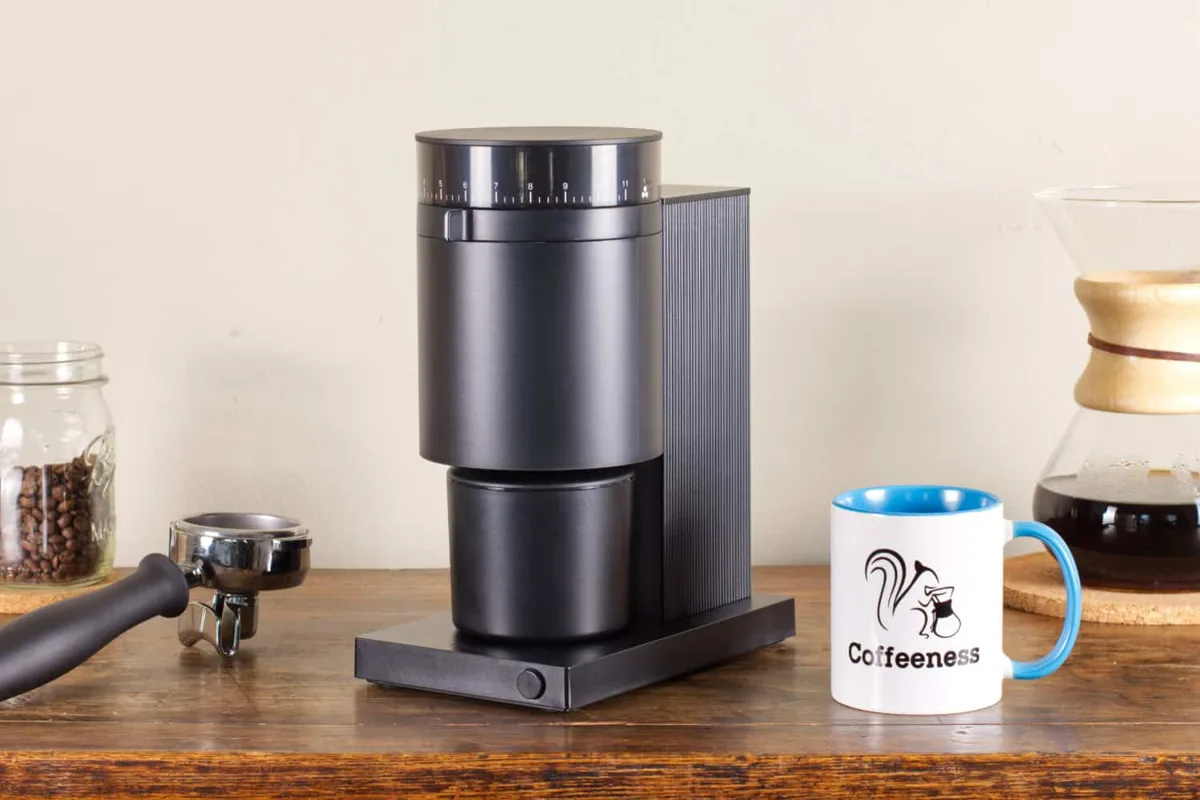
At a fixed 320 RPM and 120 W the Opus is on the slower, quieter side of home electrics, which has a knock-on benefit: less heat transferred to the grounds during a dose. Subjective reports describe it as noticeably quieter than most sub-$300 rivals, though nobody is calling it silent.
Reliability — the Caveat
This needs to be said plainly. One detailed owner report on r/espresso described a sub-two-year lifespan with heavy use, a frustrating warranty process, and eventual failure that left coarser settings usable but finer ones unworkable. Fellow did replace the unit, but the experience is worth knowing about.
The grinder is warrantied, and light-to-moderate household use is the realistic envelope. If you pull four espressos a day, every day, look at a Baratza Virtuoso+ or a hand grinder like the 1Zpresso K-Ultra instead.
Who It Suits
The Opus is built for the beginner-to-intermediate home user who wants one grinder that can do everything from espresso to French press, who values a clean countertop, and who would rather not learn the inside of a burr set.
It is not built for the espresso obsessive dialing by taste every morning, and it is not built for a small café. Within those boundaries, it is the strongest design-and-value package in its price bracket.
The Fellow Opus is the right grinder for a beginner or intermediate home user who wants one machine that covers espresso through cold brew, values clean design, and grinds a few times a day at most. It is not the right grinder for heavy daily espresso use, for someone who wants stepless dialling, or for anyone expecting Ode-grade build quality at $100 less. Buy it for versatility and aesthetics; buy something else for endurance.
Hassan is a software developer with a coffee problem. Coffee Grinder Index is his attempt to solve it — one grinder at a time.