Breville Barista Express Impress Review
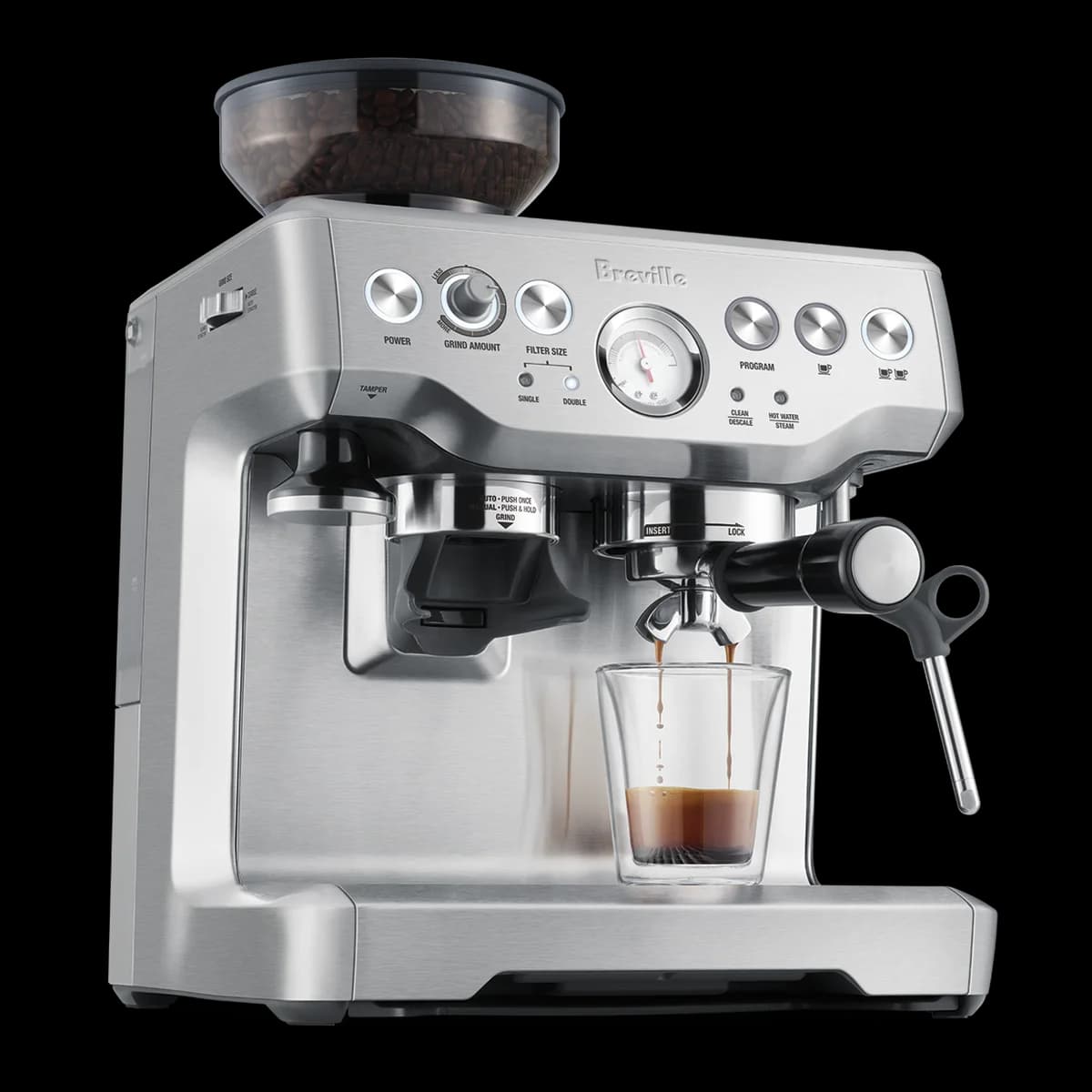
All-in-one espresso machine with integrated conical burr grinder and intelligent dosing system for perfect puck prep.
What We Love
Room for Improvement
Technical Specifications
| Weight | 10000g |
Grind Quality
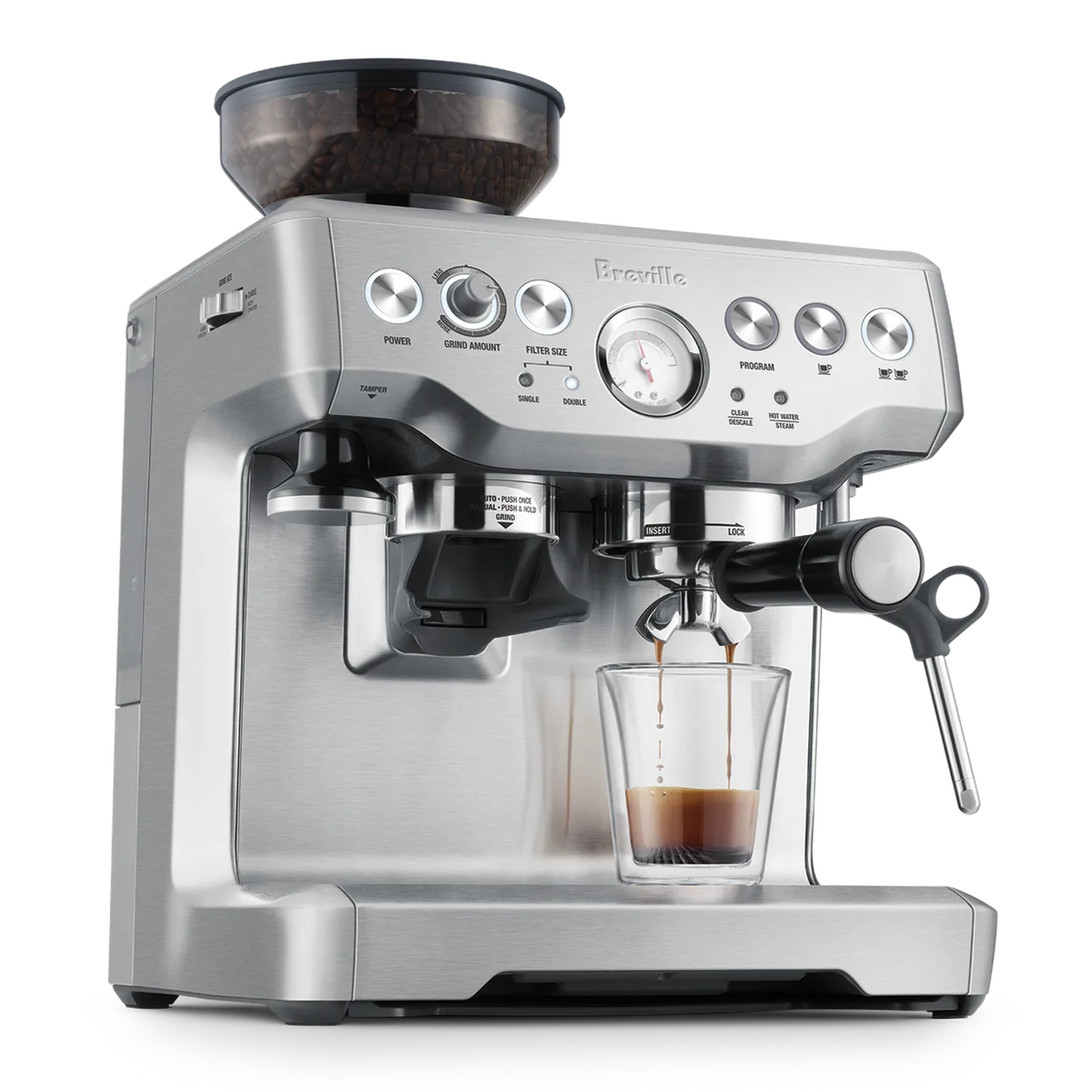
The 40mm conical steel burrs are the same platform Breville has shipped in the Barista Express line for over a decade, and the research is honest about what they deliver. The Baratza Encore ESP at roughly half the price produces a visibly tighter particle distribution, and dedicated espresso grinders like the 1Zpresso K-Ultra leave it further behind on clarity and sweetness.
What the Impress system does is make the grinder's limitations matter less. Intelligent dosing measured shots within 0.2g of the 18g target in our' testing, and the assisted tamp takes tamping pressure out of the equation.
One user on r/espresso summed it up neatly: find a bean that suits the burrs and stick with it. Oily, ultra-light single origins expose the wide distribution; a medium-roast espresso blend hides it. You are not buying a flat, unimodal grind profile here. You are buying a grind that is good enough, delivered consistently.
Adjustment and Workflow
The stepped collar offers 25 settings. That sounds generous until you remember the jumps between steps in this burr set are not micro-adjustable, and several reviewers note you can chase your tail dialling in across neighbouring clicks.
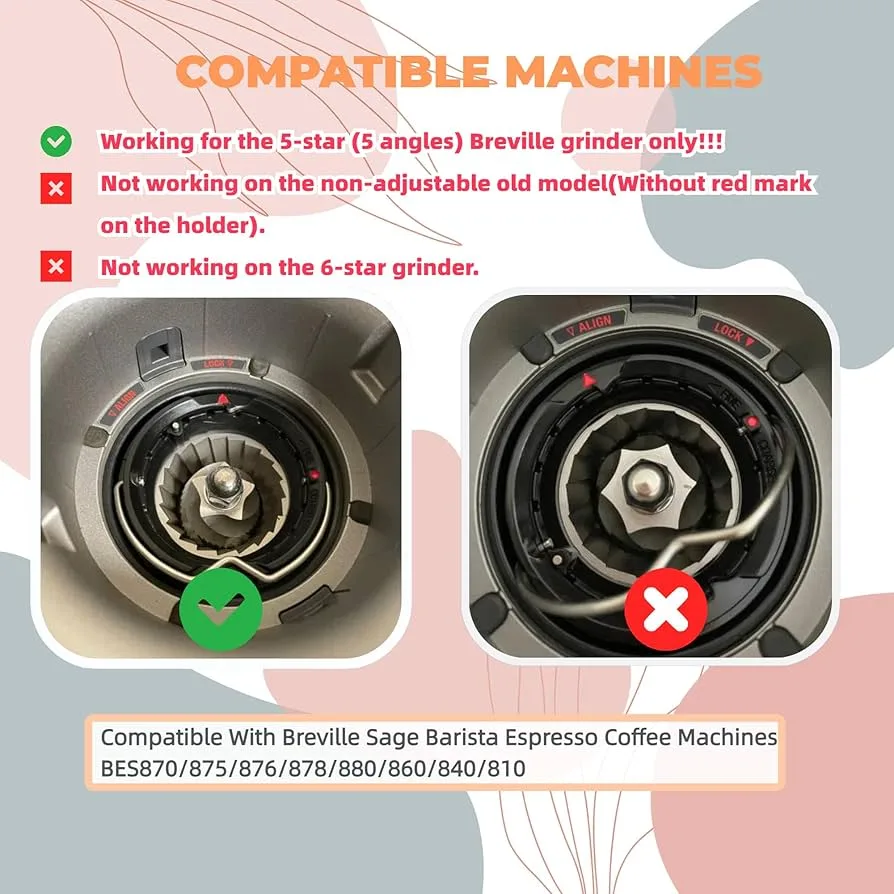
There is no stepless conversion, and the grinder cannot be swapped for an aftermarket unit because the whole cradle, chute, and dosing logic are integrated into the chassis.
For a beginner, the workflow is genuinely the point. Beans go in the hopper, portafilter docks in the cradle, a button grinds, the lever tamps with that 7° polish twist, the portafilter slides into the group, and a volumetric button pulls the shot. It is as close to a one-handed routine as semi-automatic gets.
Breville designed this as a grinder-and-machine that does two things well, rather than a combi that does both badly.
Build and Daily Use
At 10kg, the all-steel housing has real heft and does not walk across the counter when grinding. The ThermoJet-style boiler heats in seconds rather than minutes, which is the underrated quality-of-life win for anyone who wants a quick flat white before work.
The 54mm portafilter is non-standard, so replacement accessories cost more than the 58mm aftermarket world.
No anti-static system, and the grind chute does get a little channelling on humid days. The steam wand is capable of proper microfoam but, it takes weeks of practice and a thermometer before latte art is reliable.
There is no water-level sensor and the 30-minute auto-standby cannot be adjusted, both minor irritations rather than dealbreakers.
Who It Suits
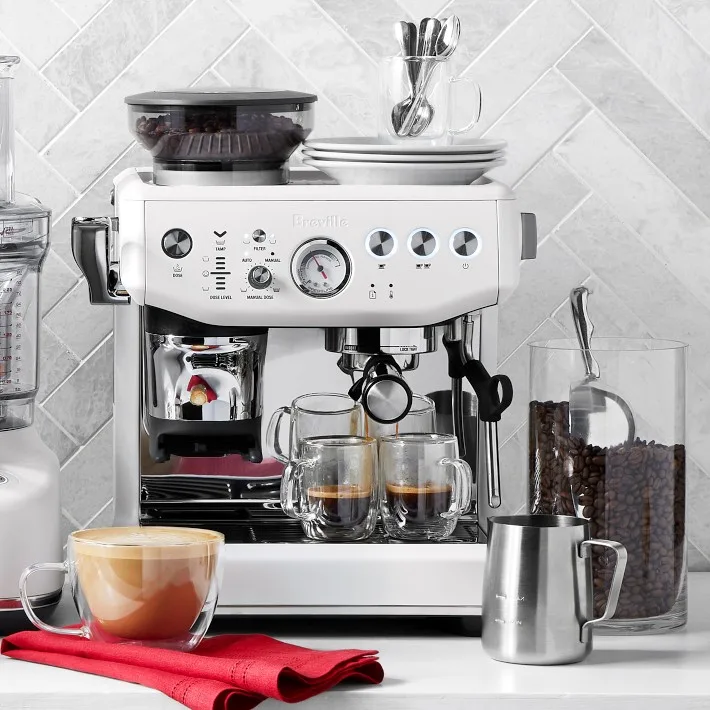
Buy this if you are starting your espresso journey and want one box that handles dosing and tamping while you learn. The intelligent puck system removes the two failure points that ruin most beginners' first six months.
If you already own a Sette 270Wi or a Niche, the integrated grinder in the Impress is a step backwards and you are better off with a separate machine and grinder.
Skip it if you roast-hop, pull light Ethiopians, or want to chase third-wave clarity. The stepped adjustment and wide distribution will frustrate you. It is also the wrong tool if you intend to upgrade the grinder in 18 months, because you cannot.
Value Against the Price
At $750–$900, the Impress is priced like an entry-level machine plus an entry-level grinder, which is roughly what you get. The clever puck system and the polished touchscreen-adjacent interface are what lift it above a basic Barista Express.
If you compare it pound-for-pound to a separate setup, a used Rancilio Silvia and a Vario+ would outperform it for similar money, but that setup assumes you already know how to dose, distribute, and tamp by hand. The Impress is sold to people who do not.
The Barista Express Impress is the right pick for a first-time espresso buyer who wants one machine that handles dosing and tamping reliably, and who plans to stick with a forgiving medium-roast blend. It is the wrong pick for anyone with an existing grinder, anyone chasing light-roast clarity, or anyone who expects to upgrade components in a year or two — because the integrated grinder cannot be swapped out.
Hassan is a software developer with a coffee problem. Coffee Grinder Index is his attempt to solve it — one grinder at a time.